Today's
EarthStation1.com 15% (Or More!) Off Commemorative Memorial Title:
Universal Newsreels Video Super Mega Set DVD, MP4 Download, USB
Stick
Today, July 17, 2026
July 17: National Lottery Day: -- Here's
a midsummer night's daydream: You - who have never won a single
thing in your entire life - decide to take a wild leap and play
the lottery. Why? There's something about free money that seems
rather appealing. Now then, you scratch the card, cross your
fingers, avoid the 13th floor, and generally hope for the best.
Then, right on - it happens. You win the big dollars and spend the
rest of the month searching for the perfect beach house on Kauai.
Well, maybe, but one thing's for sure - you have to play to win!
National Lottery Day is a chance for everyone to try their luck
and get involved. The concept of the 'lottery' has been around
since ancient times. The practice became mainstream in the late
15th century in Europe. Drawing lots to nominate a winner swept
across Europe to the United States in 1612, when a lottery was
established by King James I to fund the first permanent British
settlement in Virginia, North America. From then on, lotteries
were used by private and public bodies to raise money for wars,
towns, colleges, and community projects. In early American history
of the lottery, George Washington hosted one in the 1760s to
finance the building of the Mountain Road in Virginia. John
Hancock ran a lottery to rebuild Faneuil Hall in Boston in 1765
and the cannons used during the American Revolution from 1775 to
1783 were paid for by the support of lotteries. Lotteries just
seemed too good to be true, as concerns rose regarding their
harmful impact on the public. A constitutional prohibition was
issued against lotteries, with New York being the first state
where it was implemented. After the Civil War ended,
reconstruction in the Southern states was dependent on lotteries.
The Louisiana lottery especially became popular. It was abolished
in 1894 after Congress banned the transport of lottery materials
across state lines. Soon after, the public discovered that the
lottery was being run by a crime syndicate that committed fraud
and bribed legislators. It was a massive scandal that was widely
publicized. Lotteries gained a bad reputation and were completely
outlawed by the end of the 19th century. The negativity
surrounding gambling started softening at the turn of the 20th
century. Gambling was legalized in casinos in the state of Nevada
in the 1930s and gambling for charity also became common. On Sale
Until Midnight Tonight PT!
https://store.earthstation1.com/complete-universal-newsreels-dvd-collection-10-dual-layer-dv10.html
Today's
EarthStation1.com 15% (Or More!) Off Commemorative Memorial Title:
An Evening With Groucho One Man Comedy Show CD, MP3 Download, USB
Today, July 17, 2026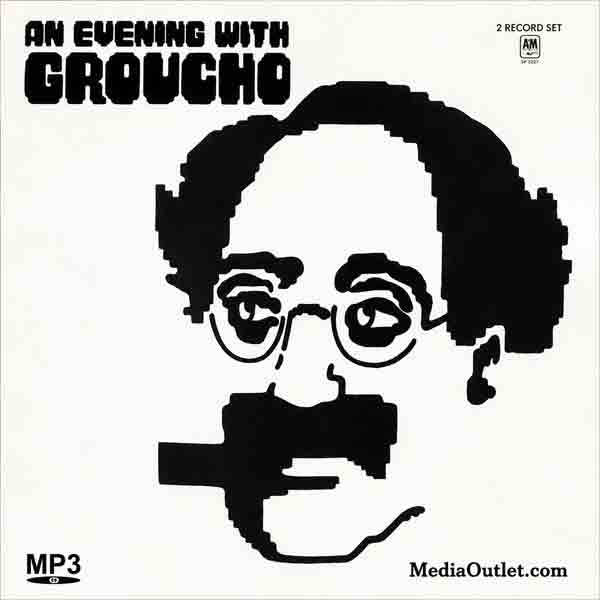
July 17: National Tattoo Day: --
Tattooing is the art of inserting pigment under the dermis layer
of the skin to create a decorative, symbolic, or pictorial design.
National Tattoo Day recognizes the history, culture, and artists
dedicated to etching ink permanently on the skin. Evidence of
humans marking their bodies with permanent designs have existed
for thousands of years. Egyptian and ice mummies reveal several
forms of religious and status symbols. The word "tattoo"
is derived from the Polynesian language for tatau, which means "to
tap or to mark." Around the world, cultures surrounding
tattooing vary, and some have changed very little over time. In
the United States, sailors brought tattooing to coastal shores
from their island exploits. Getting inked continues to grow as
technology and acceptance increase. While age, gender, religion,
and class once divide the tattooed from the non-tattooed, those
barriers are less common than they used to be. The reasons why
folks go under the needle differ, too. A tattoo may represent a
significant event or hold intensely personal meaning. However,
some people do get tattoos on a whim. Still, others confess, the
need for a new tattoo is an addiction. As the art form increases
in popularity, considering a few things before getting a tattoo is
essential: 1) Research and find a reputable artist. Remember, this
art is permanent. You will want a polished finished piece with no
regrets - that is, no regrets. 2) Once you've found an artist, be
sure you have a design in mind. If you aren't an artist, pulling
an idea from your head and making it a reality will take time to
develop. 3) Check spelling. Fact check. If you use a foreign word
or a quote in your design, research the meaning and check the
spelling. The same applies to symbols. Just because a website
translated a meaning or said symbol represented peace or love in a
specific culture, doesn't mean it's true. And it's not the
artist's responsibility to know either. Sometimes the design means
something altogether different to the client. 4) Be prepared to be
placed on a waiting list. Good artists are in demand. 5) You will
pay more for good art. Nobody wants a lousy tattoo. And -- don't
forget to celebrate World Tattoo Day on March 21! On Sale Until
Midnight Tonight PT!
https://store.earthstation1.com/an-evening-with-groucho-one-man-comedy-show-mp3-c3.html
Today's
EarthStation1.com 15% (Or More!) Off Commemorative Memorial Title:
War Crimes The Nuremberg My Lai John Demjanjuk Trials MP4 Download
DVD
Today, July 17, 2026
July 17: World Day For International
Justice (Day Of International Criminal Justice, International
Justice Day): -- Held each year as part of an effort to recognize
the system of international justice. These celebrations highlight
how international justice tribunals and courts have brought and
continue to bring justice for the victims of war crimes and crimes
against humanity. It also commemorates the day the Rome Statute
was adopted globally and ensures member nations of the
International Criminal Court live up to their expectations. Over
the centuries, the world has seen new boundaries, new frontiers,
and new challenges. Alliances were made and broken. Wars broke
out. People committed unspeakable acts against fellow men, women,
and children. The world felt the need for international justice.
Out of this need arose the Nuremberg trials, which many regard as
a milestone in establishing a permanent international court. A
series of 13 trials were carried out in Nuremberg, Germany, after
the Second World War to bring Nazi war criminals to justice. The
defendants - among them Nazi Party officials and high-ranking
military officers, German industrialists, lawyers, and doctors -
were indicted on charges of crimes against peace and crimes
against humanity. One of the first times anyone had been
prosecuted for crimes against humanity, the Nuremberg trials were
controversial at the time. Another landmark trial around the same
time - known as the Tokyo Trial or the Tokyo War Crimes Tribunal
and, formally, as the International Military Tribunal for the Far
East - tried and convicted leaders of the Empire of Japan for
joint conspiracy to start and wage war, conventional war crimes,
and crimes against humanity. A treaty to prosecute those accused
of serious crimes internationally was proposed before a diplomatic
conference in Rome, Italy, on July 17, 1998, in front of the
United Nations. Adopted as the Rome Statute by 120 states, this
treaty led to the establishment of the International Criminal
Court (ICC) in 2002. The ICC is a permanent court that that can
investigate and prosecute people suspected of committing genocide,
crimes against humanity, war crimes and (since 2018) the crime of
aggression in situations where national authorities are unable or
unwilling to act genuinely. The ICC cannot, however, replace
national courts. At a review Conference of the Rome Statute held
in Kampala (Uganda) in 2010, the Assembly of State Parties decided
to celebrate the day they adopted the treaty - June 17 - as the
World Day for International Justice. On Sale Until Midnight
Tonight PT!
https://store.earthstation1.com/war-crimes-the-nuremberg-my-lai-john-demjanjuk-trials-mp4-download-dv4.html
Today's
EarthStation1.com 15% (Or More!) Off Commemorative Memorial Title:
Korea: The Unknown War TV Korean War Series DVD, Download, USB
Drive
Today, July 17, 2026
July 17: Constitution Day (Jeheonjeol)
(South Korea): -- Commemorates the creation of the Constitution of
the Republic of Korea. Known as Jeheonjeol in Korean, Constitution
Day was first declared a South Korean national holiday on October
1, 1949. Since 2008, South Korean Constitution Day has no longer
been a non-working day due to the restructured law regarding
working hours. Despite that, on Constitution Day, a commemorative
ceremony is held at the National Assembly Building, Seoul, and
attended by the President, Chairman of the National Assembly,
Chief Justice of the Supreme Court, and constituent assembly
members. Besides, citizens hang national flags, and marathons,
college student debates, or events related to law-making at
elementary and middle schools are held. The Korean peninsula was
under the control of Japan from August 22, 1910, until the
surrender of Japan on September 2, 1945. Then, the U.S.S.R.
occupied the northern half of the peninsula, while the southern
half was under the occupation of the U.S. In 1948, South Korea
held its first democratic elections for National Assembly members,
and the elected members created a national constitution. The
constitution was ratified on July 12, 1948, and President Syngman
Rhee proclaimed the Constitution of the Republic of Korea on July
17, 1948. The first Republic of Korea was established on August
15, 1948, with Syngman Rhee as its first president. On September
9, 1948, the Democratic People's Republic of Korea (North Korea)
was founded by Kim Il-sung. But, the Republic of Korea was
officially recognized as the sole legal government of Korea by the
United Nations General Assembly (U.N.G.A.) under Resolution 195 on
December 12, 1948. Despite being the same people on the same
peninsula, South Korea and North Korea are two different
countries. On Sale Until Midnight Tonight PT!
https://store.earthstation1.com/korea-the-unknown-war-dvd-complete-6-part-tv-series-3-dis63.html
Today's
EarthStation1.com 15% (Or More!) Off Commemorative Memorial Title:
50 Years Together: Channel 2 And You WCBS-TV (1991) DVD MP4 USB
Drive
Today, July 17, 2026
July 17, 1967: Civil Rights Movements:
The American Civil Rights Movement (1954-1968): The Ghetto Riots
(The Ghetto Rebellions, The Race Riots, The Negro Riots)
(1964-1969): The Long, Hot Summer of 1967: The 1967 Newark Riots:
-- Rioting, looting, and destruction conclude a major civil
disturbance in the city of Newark, New Jersey, leaving 26 dead and
hundreds injured. In the period leading up to the riots, police
racial profiling, redlining, and lack of opportunity in education,
training, and jobs led local African American residents to feel
powerless and disenfranchised. In particular, many felt they had
been largely excluded from meaningful political representation and
often suffered police brutality. The 1967 Newark Riots were one of
159 race riots that swept cities in the United States during the
"Long, Hot Summer Of 1967". As a result of the rioting
in the Summer of 1967, and the preceding two years, President
Johnson established the Kerner Commission to investigate the
rioting and to provide recommendations for the future. In his
remarks upon signing the order establishing the Commission,
Johnson asked for answers to three basic questions about the
riots: "What happened? Why did it happen? What can be done to
prevent it from happening again and again?" Officially known
as The National Advisory Commission on Civil Disorders, it was
popularly known as the Kerner Commission after its chair, Governor
Otto Kerner, Jr. of Illinois. It was an 11-member Presidential
Commission, a special task force ordained by the President to
complete a specific, special investigation or research. The
Commission's final report, the Report of the National Advisory
Commission on Civil Disorders, or Kerner Report, was released on
February 29, 1968, after seven months of investigation. The report
became an instant bestseller, and over two million Americans
bought copies of the 426-page document. Its finding was that the
riots resulted from black frustration at the lack of economic
opportunity. Martin Luther King Jr. pronounced the report a
"physician's warning of approaching death, with a
prescription for life." The report berated federal and state
governments for failed housing, education and social-service
policies. The report also aimed some of its sharpest criticism at
the mainstream media. "The press has too long basked in a
white world looking out of it, if at all, with white men's eyes
and white perspective." The report's most famous passage
warned, "Our nation is moving toward two societies, one
black, one white-separate and unequal." Its results suggested
that one main cause of urban violence was white racism and
suggested that white America bore much of the responsibility for
black rioting and rebellion. It called to create new jobs,
construct new housing, and put a stop to de facto segregation in
order to wipe out the destructive ghetto environment. In order to
do so, the report recommended for government programs to provide
needed services, to hire more diverse and sensitive police forces
and, most notably, to invest billions in housing programs aimed at
breaking up residential segregation. On Sale Until Midnight
Tonight PT!
https://store.earthstation1.com/50-years-together-channel-2-amp-you-dvd-wcbstv-new-y502.html
Today's
EarthStation1.com 15% (Or More!) Off Commemorative Memorial Title:
We Remember: The Space Shuttle Pioneers 1981-1986 DVD, Download,
USB
Today, July 17, 2026
August 19, 1946: #BOTD: #HBD! Charles
Bolden, African American Marine aviator, test pilot, Deputy
Commandant Of Midshipmen at The Naval Academy, United States
Marine Corps Major General, astronaut who flew on four Space
Shuttle missions, Adminstrator Of NASA, is #born Charles Frank
Bolden Jr. in Columbia, South Carolina. Bolden was the first
African American to head the agency on a permanent basis, a
position he was nominated for by President Barack Obama that was
confirmed by the Senate by unanimous consent. In 2020, Bolden was
elected a member of the National Academy Of Engineering for
leadership and development of U.S. human spaceflight and space
operations programs, and for revitalizing fundamental aeronautics
research. On Sale Until Midnight Tonight PT!
https://store.earthstation1.com/we-remember-the-space-shuttle-pioneers-198119811986.html
Today's
EarthStation1.com 15% (Or More!) Off Commemorative Memorial Title:
Monster: A Portrait Of Stalin In Blood TV Series DVD, Download,
USB
Today, July 17, 2026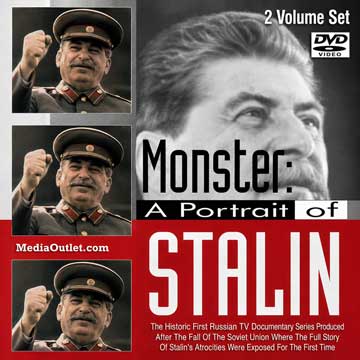
July 16-17, 1918 (July 4-5 OS): The
Aftermath Of World War I: 20th Century Revolutions: 20th Century
Revolutions: The Revolutions Of 1917-1923: The Interwar Period
(The Interbellum, Between The Wars): The Russian Revolution: The
Execution Of The Romanov Family: -- #DOTD: #RIP: Bolsheviks kill
Tsar Nicholas II of Russia and his family. On April 30, 2008, two
skeletal remains found near Yekaterinburg, Russia are confirmed by
Russian scientists to be the remains of Alexei and Anastasia, two
of the children of the last Tsar of Russia, whose entire family
was executed at Yekaterinburg by the Bolsheviks. The Russian
Imperial Romanov family (Tsar Nicholas II, his wife Tsarina
Alexandra and their five children Olga, Tatiana, Maria, Anastasia,
and Alexei) and all those who chose to accompany them into
imprisonment - notably Eugene Botkin, Anna Demidova, Alexei Trupp
and Ivan Kharitonov - were shot, bayoneted and clubbed to death in
Yekaterinburg on the night of 16-17 July 1918. The Tsar and his
family were killed by Bolshevik troops led by Yakov Yurovsky under
the orders of the Ural Regional Soviet and according to
instructions by Lenin, Yakov Sverdlov and Felix Dzerzhinsky. Their
bodies were then stripped, mutilated, burned and disposed of in a
field called Porosenkov Log in the Koptyaki forest. Following the
February Revolution, the Romanov family and their loyal servants
were imprisoned in the Alexander Palace before being moved to
Tobolsk and then Ekaterinburg, where they were killed, allegedly
at the express command of Vladimir Lenin. Despite being informed
that "the entire family suffered the same fate as its head",
the Bolsheviks only announced Nicholas's death, with the official
press release that "Nicholas Romanov's wife and son have been
sent to a secure place." For over eight years, the Soviet
leadership maintained a systematic web of disinformation as to the
fate of the family, from claiming in September 1919 that they were
murdered by left-wing revolutionaries to denying outright in April
1922 that they were dead. They acknowledged the murders in 1926
following the publication of an investigation by a White Emigre (a
Russian subject who emigrated from Imperial Russia in the wake of
the Russian Revolution and Russian Civil War, and who was in
opposition to the Bolsheviks who took control of the country after
the revolution), but maintained that the bodies were destroyed and
that Lenin's Cabinet was not responsible. The emergence of Romanov
impostors drew media attention away from Soviet Russia, and
discussion regarding the fate of the family was suppressed by
Joseph Stalin from 1938. The burial site was discovered in 1979 by
amateur sleuth Alexander Avdonin, but the existence of the remains
was not made public until 1989, during the glasnost period. The
identity of the remains was confirmed by forensic and DNA
investigation. They were reburied in the Peter and Paul Cathedral
in Saint Petersburg in 1998, 80 years after they were killed, in a
funeral that was not attended by key members of the Russian
Orthodox Church, who disputed the authenticity of the remains. A
second, smaller grave containing the remains of two Romanov
children missing from the larger grave was discovered by amateur
archaeologists (Dr Alexander Avdonin, Dr Sergei Nikitin and Peter
Sarandinaki) in 2007. However, their remains are kept in a state
repository pending further DNA tests. In 2008, after considerable
and protracted legal wrangling, the Russian Prosecutor General's
office rehabilitated the Romanov family as "victims of
political repressions". A criminal case was opened by the
post-Soviet government in 1993, but nobody was prosecuted on the
basis that the perpetrators were dead. Some historians attribute
the order to the government in Moscow, specifically Yakov Sverdlov
and Vladimir Lenin, who wished to prevent the rescue of the
Imperial Family by the approaching Czechoslovak Legion (fighting
with the White Army against the Bolsheviks) during the ongoing
Russian Civil War. This is supported by a passage in Leon
Trotsky's diary. An investigation led by Vladimir Solovyov
concluded in 2011 that, despite the opening of state archives in
the post-Soviet years, there is yet no written document found that
indicates that either Lenin or Sverdlov instigated the orders;
however, they did endorse the executions after they occurred.
Lenin had close control over the Romanovs although he ensured his
name was not associated with their fate in any official documents.
President Boris Yeltsin described the killings as one of the most
shameful pages in Russian history. On Sale Until Midnight Tonight
PT!
https://store.earthstation1.com/monster-a-portrait-of-stalin-in-blood-dvd-tv-series-2-disc2.html
Today's
EarthStation1.com 15% (Or More!) Off Commemorative Memorial Title:
The Spanish Civil War Documentary Set MP4 Video Download DVD
Today, July 17, 2026
July 17, 1936: The Interwar Period (The
Interbellum, Between The Wars): The History Of Spain: The Second
Spanish Republic (The Spanish Republic): The Spanish Civil War:
The Spanish Coup Of July 1936: -- The Spanish Civil War begins
when an Armed Forces rebellion against the leftist Popular Front
government of Spain fractures the Spanish Republican Armed Forces
following a period of troubles in the Second Spanish Republic. A
group of officers attempted to overthrow the left-wing Popular
Front government, elected five months previously, in a military
coup. Planning had started in early 1936, and the coup was
launched on July 17 and 18. The coup failed to take complete
control of the country and civil war ensued. The uprising was
intended to be swift, but the government retained control of most
of the country including Malaga, Jaen and Almeria. Cadiz was taken
for the rebels and General Queipo de Llano managed to secure
Seville. In Madrid, the rebels were hemmed into the Montana
barracks, which fell with much bloodshed. On 19 July the cabinet
headed by the newly appointed prime minister Jose Giral ordered
the distribution of weapons to the unions, helping to defeat the
rebels in Madrid, Barcelona, and Valencia, which led to anarchists
taking control of large parts of Aragon and Catalonia. Rebel
General Goded surrendered in Barcelona and was later condemned to
death. The rebels had secured the support of around half of
Spain's Peninsular army, which allowing for large numbers on
extended leave totaled about 66,000 men, and all of the
30,000-strong Army of Africa. The Army of Africa was Spain's most
professional and effective military force. The government retained
less than half the supply of rifles, heavy and light machine guns
and artillery pieces. Both sides had few tanks and outdated
aircraft, and naval capacity was fairly even. Officers' defections
weakened Republican units of all types. On Sale Until Midnight
Tonight PT!
https://store.earthstation1.com/the-spanish-civil-war-documentary-set-mp4-video-download-dvd.html
Today's
EarthStation1.com 15% (Or More!) Off Commemorative Memorial Title:
Mein Kampf: A Blueprint For The Age Of Chaos 1960 DVD, MP4, USB
Drive
Today, July 17, 2026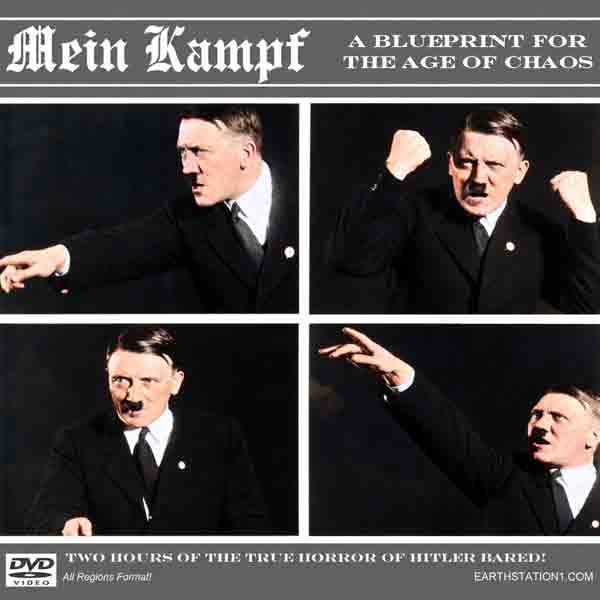
July 17, 1932: The Interwar Period (The
Interbellum, Between The Wars): The Road To War: Nazi Germany (The
German Reich, The Third Reich): Gleichschaltung (German:
"Coordination", effectively meaning "Nazification"):
Preussenschlag (Prussian Coup): Altonaer Blutsonntag (Altona
Bloody Sunday): -- The Prussian Coup is triggered when a violent
clash between the Sturmabteilung (SA), Schutzstaffel (SS) and the
police against the Communist Party (KPD) occurs, resulting in 18
people dead, 16 of them by police bullets, and forcing German
President Paul von Hindenburg three days later to dissolve the
government of The Free State of Prussia, the largest State of
German Reich. The Preussenschlag Of 1932, also known in English as
The Coup In Prussia or The Putsch In Prussia, was a takeover of
the Free State of Prussia, the largest German state, by Chancellor
Franz von Papen, using an emergency decree issued by President
Paul von Hindenburg under Article 48 of the Weimar Constitution
that placed Prussia directly under the rule of the national
government. It was a major step towards the end of the Weimar
Republic, as it later facilitated the Nazification
(Gleichschaltung) of Germany after Adolf Hitler's rise to power.
The pretext for this measure was violent unrest in some areas of
Prussia and the alleged inability of the Prussian government to
handle the matter. It is more likely however that the Prussian
government headed by Minister-President Otto Braun, with authority
over the powerful Prussian police force, was simply one of the
last major forces standing in the way of Papen's plans for
nationalist rule. The move was facilitated by the unstable
situation of the Prussian government. The centre-left coalition of
the Social Democrats, Centre Party and liberal German Democratic
Party had ruled Prussia without interruption since 1918, but had
lost its majority in the Landtag (state parliament) in the
election on April 24, 1932. However, under the Prussian
constitution, a government could be removed from office only if
there was a positive majority for a prospective successor. This
provision, known as a "constructive vote of no confidence,"
was intended to ensure that a government had sufficient support to
govern. The Communists and National Socialists held over half the
seats between them, but would not cooperate with each other or
with other parties. Thus, no politically realistic alternative
government was possible, and the Braun-led coalition remained in
office. However, Papen also lacked majority support in the
Reichstag. His only means to govern was through the emergency
provisions of Article 48, and hence via decrees issued by the
Reichsprasident Hindenburg, over whom Papen had great influence.
The emergency decree of July 20 dismissed the Braun government and
declared Papen Reichskommissar (Reich Commissioner) for Prussia,
vested in him all the competences of the Prussian ministries, and
gave him direct control over the Prussian government. The decree
was declared partially unconstitutional on October 25, 1932, by
the German Constitutional Court, but only in so far as the formal
existence of the Prussian cabinet was concerned. The transfer of
power to Papen was upheld, while the Braun cabinet retained the
right to represent Prussia in the Reichsrat. Prussia remained
under direct administration of the federal government until April
1933. The Enabling Act of 1933 gave Hitler the effective power to
enact legislation (including extraconstitutional laws) without the
consent of the Reichstag. One of Hitler's uses of the Enabling Act
was to dissolve all of the state parliaments (except Prussia's)
and reconstitute them based on the results of the partly-free
federal election held in March (with the exception of Communist
seats). Prussia was excluded from this measure because it had held
state elections at the same time, with a similar result (a Nazi
plurality). With the Communists now banned and most Social
Democrats either jailed or in exile (the SPD would be banned
outright in June), the Nazis now had a majority in the Prussian
parliament, which elected Hermann Goering as Minister-President.
However, under Hitler's rule, German states were effectively
replaced by Nazi Gaue, so Goering's post was largely ceremonial.
The state of Prussia was finally dissolved by the Allies after the
end of World War II. On Sale Until Midnight Tonight PT!
https://store.earthstation1.com/mein-kampf-1960-dvd-adolf-hitler-third-reich-holoc1960.html
Today's
EarthStation1.com 15% (Or More!) Off Commemorative Memorial Title:
Erwin Rommel Vs Bernard Montgomery World War II MP4 Video Download
DVD
Today, July 17, 2026
July 17, 1944: The European Civil War:
World War II: The Second European War (The European Theater Of
World War II): The Western Front Of World War II: Operation
Overlord (The Battle Of Normandy, The Normandy Campaign): D-Day
(The D-Day Landings, The Normandy Landings): Aviation: Military
Aviation: Air Warfare Of World War II: The Aerial Interdiction Of
Field Marshal Erwin Rommel's Staff Car: -- Field Marshal Erwin
Rommel is strafed and nearly fatally wounded at
Sainte-Foy-de-Montgommery in Normandy by a Royal Canadian Air
Force (RCAF) Supermarine Spitfire of 412 Squadron piloted by
Charley Fox while Rommel was returning in his staff car from
visiting the headquarters of the I SS Panzer Corps. The driver
sped up and attempted to get off the main roadway, but a 20 mm
round shattered his left arm, causing the vehicle to veer off of
the road and crash into trees. Rommel was thrown from the car,
suffering injuries to the left side of his face from glass shards
and three fractures to his skull. He was hospitalised with major
head injuries (assumed to be almost certainly fatal). Having had a
role, though an uncertain one, in Operation Valkyrie, the initial
plot to remove Adolf Hitler from power over Nazi Germany that
resulted in the 20 July Plot to assassinate Hitler, his
incapacitation removed him as the most likely leader to assume
control of Germany after the coup, and greatly demoralized them as
well. Rommel reportedly suggested that Hitler be arrested and
brought to trial for his crimes; he did not attempt to implement
this plan when Hitler visited Margival, France, on 17 June. The
arrest plan would have been highly improbable, as Hitler's
security was extremely tight. Rommel would have known this, having
commanded Hitler's army protection detail in 1939. He was in
favour of peace negotiations, and repeatedly urged Hitler to
negotiate with the Allies, which is dubbed by some as "hopelessly
naive", considering no one would trust Hitler, and "as
naive as it was idealistic, the attitude he showed to the man he
had sworn loyalty". On 15 July, Rommel wrote a letter to
Hitler giving him a "last chance" to end the hostilities
with the Western Allies, urging Hitler to "draw the proper
conclusions without delay." What Rommel didn't know was that
the letter took two weeks to reach Hitler because of the
precautions of Field Marshall Gunter von Kluge, a member of the
military resistance to Hitler. On Sale Until Midnight Tonight PT!
https://store.earthstation1.com/erwin-rommel-vs-bernard-montgomery-world-war-ii-mp4-video-download-dvd.html
Today's
EarthStation1.com 15% (Or More!) Off Commemorative Memorial Title:
USS Indianapolis: Ship Of Doom Naval Disaster Scandal MP4 Download
DVD
Today, July 17, 2026
July 17, 1944: World War II: The Pacific
War (The Asia-Pacific War, The Pacific Theater Of World War II):
Military logistics Of World War II: Munitions Explosions: The Port
Chicago Disaster: -- Near the San Francisco Bay, two ships laden
with ammunition for the war, Liberty Ship SS E. A. Bryan and
Victory Ship SS Quinault Victory (also spelled Quinalt), explode
at the Port Chicago Naval Magazine in Port Chicago, California,
killing 320 sailors and civilians and injuring 390 others.
Munitions detonated while being loaded onto the Liberty Ship cargo
vessel SS E. A. Bryan bound for the Pacific Theater of Operations.
It is known as one the largest artificial non-nuclear explosions
on record; however, some have suggested that the explosion was
caused by a small atomic device, detonated either by mistake or
design as part of a preliminary nuclear weapons test, occurring
one year prior to the official first test of an atomic device at
the Trinity test site. A month later, unsafe work policies and
conditions inspired hundreds of servicemen, of whom a large share
were black servicemen detailed to perform loading and unloading
duties, to refuse to load munitions, an act known as the Port
Chicago Mutiny. Fifty men known the "Port Chicago 50"
were convicted of mutiny and sentenced to 15 years of prison and
hard labor, as well as a dishonorable discharge. Forty-seven of
the 50 were released in January 1946; the remaining three served
additional months in prison. During and after the trial, questions
were raised about the fairness and legality of the court-martial
proceedings. Owing to public pressure, the United States Navy
reconvened the courts-martial board in 1945; the court affirmed
the guilt of the convicted men. Widespread publicity surrounding
the case turned it into a cause celebre among certain Americans;
it and other race-related Navy protests of 1944-45 led the Navy to
change its practices and initiate the desegregation of its forces
beginning in February 1946. In 1994, the Port Chicago Naval
Magazine National Memorial was dedicated to the lives lost in the
disaster. On June 11, 2019, a concurrent resolution sponsored by
U.S. Representative Mark DeSaulnier was agreed upon by the 116th
United States Congress. The resolution recognized the victims of
the explosion and officially exonerated the 50 men court-martialed
by the Navy. On Sale Until Midnight Tonight PT!
https://store.earthstation1.com/uss-indianapolis-ship-of-doom-naval-disaster-scandal-mp4-download-dv4.html
Today's
EarthStation1.com 15% (Or More!) Off Commemorative Memorial Title:
War Props: The Lockheed P-38 Lightning DVD, MP4 Download, USB
Drive
Today, July 17, 2026
July 17, 1944: The European Civil War:
World War II: The Second European War (The European Theater Of
World War II): The Western Front Of World War II: Aviation:
Military Aviation: Air Warfare Of World War II: European Air
Operations During The Battle Of Europe: Tactical Bombing During
World War II: Incendiary Weapons: Napalm: The Liberation Of
France: Operation Overlord (The Battle Of Normandy, The Normandy
Campaign): D-Day (The D-Day Landings, The Normandy Landings): The
Battle Of Saint-Lo: -- Napalm incendiary bombs are dropped, for
what is reputed to be the first time, by American P-38 pilots on a
fuel depot at Coutances, near Saint-Lo, France. The first use of
napalm in combat was in August 1943 during the Allied invasion of
Sicily, when American troops using napalm-fueled flamethrowers
burned down a wheat field where German forces were believed to be
hiding. Napalm incendiary bombs were first used the following
year, although the exact date and battle are disputed. Two-thirds
of napalm bombs produced during World War II were used in the
Pacific War. Napalm was often deployed against Japanese
fortifications on Saipan, Iwo Jima, the Philippines, and Okinawa,
where deeply dug-in Japanese troops refused to surrender.
Following a shortage of conventional thermite bombs, general
Curtis E. LeMay, among other high-ranking servicemen of the United
States Army Air Forces, ordered air raids on Japan to start using
napalm instead. A 1946 report by the National Defense Research
Council claims that 40,000 tons of M69s were dropped on Japan
throughout the war, damaging 64 cities and causing more deaths
than the atomic bombings of Hiroshima and Nagasaki. German
fortifications and transportation hubs were targeted with napalm
during both Operation Overlord and the Battle of the Bulge,
sometimes in conjunction with artillery. During the Allied siege
of La Rochelle, napalm was dropped on the outskirts of the Royan
pocket, inadvertently killing French civilians. The Royal Air
Force (RAF) used napalm to a limited extent, in both the Pacific
War and European Theatre of World War II. The Battle of Saint-Lo
was one of the three conflicts in the battle of the hedgerows
which took place between July 7 and 19, 1944, in Saint-Lo, Manche,
Normandy, France, part of the military engagements of Operation
Overlord. Saint-Lo had fallen to Germany in 1940, and, after the
Invasion of Normandy, the Americans targeted the city, as it
served as a strategic crossroads. American bombardment caused
heavy damage (up to 95% of the city was destroyed) and a high
number of casualties, which resulted in the martyr city being
called "The Capital of Ruins", popularized in a report
by Samuel Beckett. Napalm is an incendiary mixture of a gelling
agent and a volatile petrochemical (usually gasoline or diesel
fuel). The name is a portmanteau of two of the constituents of the
original thickening and gelling agents: oprecipitated aluminium
salts of naphthenic acid and palmitic acid. A team led by chemist
Louis Fieser originally developed napalm for the US Chemical
Warfare Service in 1942 in a secret laboratory at Harvard
University. Of immediate first interest was its viability as an
incendiary device to be used in American fire-bombing campaigns
during World War II; its potential to be coherently projected into
a solid stream that would carry for distance (instead of as a
bloomy fireball of pure gasoline) resulted in widespread adoption
in infantry and tank-/boat-mounted flamethrowers as well. Napalm
burns at temperatures ranging from 800 to 1,200 _C (1,470 to 2,190
_F). It burns longer than gasoline, is more easily dispersed, and
adheres to its targets. These traits make it both effective and
controversial. It has been widely used from the air and from the
ground, the largest use having been via airdropped bombs in World
War II in the incendiary attacks on Japanese cities, in 1945. The
U.S. military have used it for close air support roles in the
Korean War, the Vietnam War, and various others. Napalm has also
fueled most of the flamethrowers (tank-, ship-, and
infantry-based) used since World War II, giving them much greater
range. As a direct successor to napalm, the U.S. Armed Forces
phased in the use Mark 77 bombs since the beginning of the
2003-2011 Iraq War. On Sale Until Midnight Tonight PT!
https://store.earthstation1.com/war-props-the-p38-lightning-d38.html
Today's
EarthStation1.com 15% (Or More!) Off Commemorative Memorial Title:
World News Today CBS WWII Radio News Broadcasts MP3 CD USB Flash
Drive
Today, July 17, 2026
July 17, 1945: The European Civil War:
World War II: The Second European War (The European Theater Of
World War II): World War II Conferences: The Potsdam Conference
(July 17 - August 2, 1945) (German: Potsdamer Konferenz; Soviet
Union: The Berlin Conference Of The Three Heads Of Government Of
The USSR, USA and UK): -- The three main Allied nations and their
retinue meet in the German city of Potsdam to decide the future of
a defeated Germany at Cecilienhof, the home of the former Crown
Prince Wilhelm, the last palace built by the House Of Hohenzollern
that ruled the Kingdom of Prussia and the German Empire until the
end of World War I. The participants were the Soviet Union, the
United Kingdom, and the United States, represented by Communist
Party General Secretary Joseph Stalin, Prime Ministers Winston
Churchill and, later, Clement Attlee, and President Harry S.
Truman. Stalin, Churchill, and Truman-as well as Attlee, who
participated alongside Churchill while awaiting the outcome of the
1945 general election, and then replaced Churchill as Prime
Minister after the Labour Party's defeat of the
Conservatives-gathered to decide how to administer the defeated
Nazi Germany, which had agreed to unconditional surrender nine
weeks earlier, on 8 May (V-E Day). The goals of the conference
also included the establishment of postwar order, peace treaty
issues, and countering the effects of the war. At the Yalta
Conference France had been granted an occupation zone within
Germany, France had been a participant in the Berlin Declaration,
and France was to be an equal member of the Allied Control
Council. Nevertheless, at the insistence of the Americans, General
de Gaulle was not invited to Potsdam; a diplomatic slight which
was a cause of deep and lasting resentment. Reasons for the
omission included the longstanding personal mutual antagonism
between Roosevelt and De Gaulle, ongoing disputes over the French
and American occupation zones and anticipated conflicts of
interest over French Indochina; but also reflected the judgement
of both the British and Americans that French aims in respect of
many items on the Conference agenda were likely to be at variance
with Anglo/American agreed objectives. On Sale Until Midnight
Tonight PT!
https://store.earthstation1.com/cbs-wwii-radio-broadcasts-world-news-today-mp3-c3.html
Today's
EarthStation1.com 15% (Or More!) Off Commemorative Memorial Title:
Hitler's #1 Enemy: Raoul Wallenberg DVD, Video Download, USB Drive
Today, July 17, 2026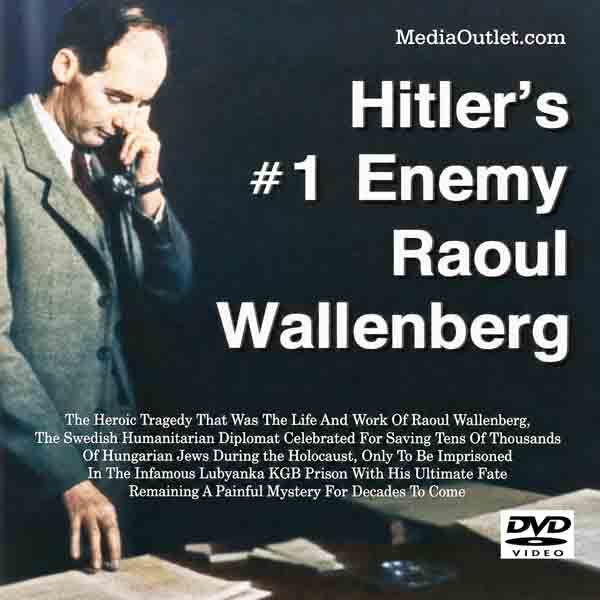
July 17, 1947: #DOTD (?): #RIP: Raoul
Wallenberg, Swedish architect, businessman, diplomat, and
humanitarian, widely celebrated for saving tens of thousands of
Jews in Nazi-occupied Hungary during the Holocaust from German
Nazis and Hungarian Fascists during the later stages of World War
II while serving as Sweden's special envoy in Budapest between
July and December 1944, issuing protective passports and
sheltering Jews in buildings designated as Swedish territory (b.
August 4, 1912) supposedly #dies on this date, according to the
KGB secret police, while imprisoned by them in their Lubyanka
headquarters and affiliated prison in Moscow. He was reputed to
have been buried at Szilagyi Erzebet Fasor in Pasaret, Budapest II
in Budapest, Hungary. On January 17, 1945, Raoul Wallenberg was
taken into Soviet custody while in Hungary; he was never publicly
seen again. Raoul Wallenberg was born Raoul Gustaf Wallenberg in
Stockholm, Sweden. On October 29, 1944, during the Siege Of
Budapest by the Red Army, elements of the 2nd Ukrainian Front
under Soviet Marshal Rodion Malinovsky launched an offensive
against Budapest. By late December, the city had been encircled by
Soviet forces. Despite this, the German commander of Budapest, SS
Lieutenant General Karl Pfeffer-Wildenbruch, refused all offers to
surrender, setting in motion a protracted and bloody Siege Of
Budapest. At the height of the fighting, on January 17, 1945,
Wallenberg was called to General Malinovsky's headquarters in
Debrecen to answer allegations that he was engaged in espionage.
According to the wife of Geza Soos, a ringleader of the Hungarian
resistance who worked with Wallenberg, he used the opportunity to
try to transport copies of the Auschwitz Report to the interim
Hungarian government in Debrecen. Wallenberg's last recorded words
were, "I'm going to Malinovsky's ... whether as a guest or
prisoner I do not know yet." Wallenberg was then detained by
SMERSH on suspicion of espionage and subsequently disappeared.
Documents recovered in 1993 from previously secret Soviet military
archives and published in the Swedish newspaper Svenska Dagbladet
show that an order for Wallenberg's arrest was issued by Deputy
Commissar for Defence (and future Soviet Premier) Nikolai Bulganin
and transmitted to Malinovsky's headquarters on the day of
Wallenberg's disappearance. In 2003, a review of Soviet wartime
correspondences indicated that Vilmos Bohm, a Hungarian politician
who was also a Soviet intelligence agent, may have provided
Wallenberg's name to SMERSH as a person to detain for possible
involvement in espionage. The motives behind Wallenberg's arrest
and imprisonment by the Soviet government, along with questions
surrounding the circumstances of his death and his ties to US
intelligence, remain mysterious and are the subject of continued
speculation. Because of his courageous actions on behalf of the
Hungarian Jews, Raoul Wallenberg has been the subject of numerous
humanitarian honors in the decades following his presumed death.
In 1981, U.S. Congressman Tom Lantos, himself one of those saved
by Wallenberg, sponsored a bill making Wallenberg an Honorary
Citizen of the United States. He was the second person ever to
receive this honor, after Winston Churchill (and unlike
Churchill's, neither of his parents had been born in the United
States). Wallenberg is also an honorary citizen of Canada,
Hungary, Australia, and Israel. Israel has also designated
Wallenberg one of the Righteous Among the Nations. Monuments have
been dedicated to him, and streets have been named after him
throughout the world. A Raoul Wallenberg Committee of the United
States was created in 1981 to "perpetuate the humanitarian
ideals and the nonviolent courage of Raoul Wallenberg." It
gives the Raoul Wallenberg Award annually to recognize persons who
carry out those goals. Postage stamps have been issued in his
honour by Argentina, Australia, Canada, Dominica, Hungary,
Kazakhstan, Sweden, and the United States. On July 26, 2012, he
was awarded a Congressional Gold Medal by the United States
Congress "in recognition of his achievements and heroic
actions during the Holocaust." In October 2016, 71 years
after his disappearance, Wallenberg was formally declared dead by
the Swedish Tax Agency. During the Holocaust, Wallenberg saved an
estimated 33,000 Jews by issuing thousands of protective
documents, by securing the release of Jews from deportation
trains, death march convoys, labor service brigades, and by
establishing the International Ghetto, a network of 31 protected
houses. Several former prisoners have claimed to have seen
Wallenberg after his reported death in 1947. In February 1949,
former German Colonel Theodor Von Dufving, a prisoner of war,
provided statements concerning Wallenberg. While in the transit
camp in Kirov, while being moved to Vorkuta, Dufving encountered a
prisoner dressed in civilian clothes with his own special guard.
The prisoner claimed that he was a Swedish diplomat and said he
was there "through a great error". Nazi hunter Simon
Wiesenthal searched for Wallenberg and collected several
testimonies. For example, British businessman Greville Wynne, who
was imprisoned in the Lubyanka prison in 1962 for his connection
to KGB defector Oleg Penkovsky, stated that he had talked to, but
could not see the face of, a man who claimed to be a Swedish
diplomat. Efim (or Yefim) Moshinsky claims to have seen Wallenberg
on Wrangel Island in 1962. An eyewitness asserted that she had
seen Wallenberg in the 1960s in a Soviet prison. During a private
conversation about the conditions of detention in Soviet prisons
at a Communist Party reception in the mid-1970s, a KGB general is
reported to have said that "conditions could not be that
harsh, given that in Lubyanka prison there is some foreign
prisoner who had been there now for almost three decades."
The last reported sightings of Wallenberg were by two independent
witnesses who said they had evidence that he was in a prison in
November 1987. John Farkas was a resistance fighter during World
War II and was the last man claiming to have seen Wallenberg
alive. Farkas' son has stated that there have been sightings of
Wallenberg "up into the 1980s in Russian prisons and
psychiatric hospitals." Raoul Wallenberg's half-brother, Guy
Von Dardel, a well-known physicist, retired from CERN, was
dedicated to finding out his half-brother's fate. He traveled to
the Soviet Union about fifty times for discussions and research,
including an examination of the Vladimir prison records. Over the
years, Professor Von Dardel compiled a 50,000-page archive of
interviews, journal articles, letters, and other documents related
to his quest. In 1991, Dardel initiated a Swedish-Russian working
group to search eleven separate military and government archives
from the former Soviet Union for information about Wallenberg's
fate, but the group was not able to find conclusive information.
Many, including Professor Von Dardel and his daughters, Louise and
Marie, do not accept the various versions of Wallenberg's death.
They continue to request that the archives in Russia, Sweden, and
Hungary be opened to impartial researchers. In 2012, Russian
lieutenant-general Vasily Khristoforov, head of the registration
branch of the Russian Federal Security Service, said that the
Wallenberg case was still open. He dismissed allegations of a
continuing cover-up; referring to the legacy Soviet agency from
which his department sprang, Khristoforov said: "This is
another state and a different special service." On Sale Until
Midnight Tonight PT!
https://store.earthstation1.com/hitler39s-1-enemy-raoul-wallenberg-391.html
Today's
EarthStation1.com 15% (Or More!) Off Commemorative Memorial Title:
Vietnam: The Ten Thousand Day War TV Series DVD, Video Download,
USB
Today, July 17, 2026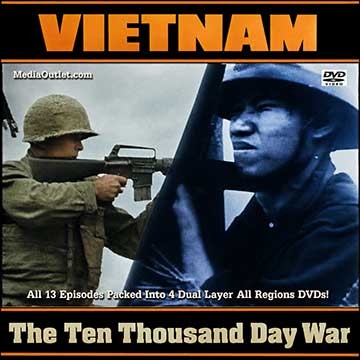
July 17, 1954: The Aftermath Of World War
II: The Cold War: The Cold War In Asia: The Aftermath Of The First
Indochina War (1946-1954) (The Indochina War, The Anti-French
Resistance War, The French-Indochina War): Vietnamese Migration:
The 1954-1955 Great Migration: South Vietnam-United States
Relations: Operation Passage To Freedom: -- The United States Navy
begins its two-year assistance in the evacuation of 310,000
Vietnamese civilians, soldiers and non-Vietnamese members of the
French Army from communist North Vietnam to South Vietnam
following the end of the First Indochina War, an evacuation that
will conclude on May 18, 1955. The French and other countries may
have transported a further 500,000. In the wake of the French
defeat at the Battle of Dien Bien Phu, the Geneva Accords of 1954
decided the fate of French Indochina after eight years of war
between French Union forces and the Viet Minh, which sought
Vietnamese independence. The accords resulted in the partition of
Vietnam at the 17th parallel north, with Ho Chi Minh's communist
Viet Minh in control of the north and the French-backed State of
Vietnam in the south. The agreements allowed a 300-day period of
grace, beginning on July 17, 1954 and ending on May 18, 1955, in
which people could move freely between the two Vietnams before the
border was sealed. The partition was intended to be temporary,
pending elections in 1956 to reunify the country under a national
government. Between 600,000 and one million northerners moved
south, including more than 200,000 French citizens and soldiers in
the French army while between 14,000 - 45,000 civilians and
approximately 100,000 Viet Minh fighters moved in the opposite
direction. On Sale Until Midnight Tonight PT!
https://store.earthstation1.com/vietnam-the-10000-day-war-4-dual-layer-dvds-all-13-10000413.html
Today's
EarthStation1.com 15% (Or More!) Off Commemorative Memorial Title:
To Engineer Is Human: Engineering Disasters DVD, Download, USB
Drive
Today, July 17, 2026
July 17, 1981: Engineering Disasters:
Bridge Disasters: Bridge Disasters In The United States: The
Kansas City Hyatt Regency Hotel: The Hyatt Regency Walkway
Collapse: -- The Hyatt Regency Hotel in Kansas City, Missouri
suffers a catastrophic structural collapse of two overhead
walkways, causing the deadliest non-deliberate structural failure
in American history, and the deadliest structural collapse in the
United States until the collapse of the World Trade Center towers
20 years later. Loaded with partygoers, the concrete and glass
platforms cascaded down, crashing onto a tea dance in the lobby,
killing 114 and injuring 216. Kansas City society was afflicted
for years, with billions of dollars of insurance claims, legal
investigations, city government reforms, and Pulitzer
Prize-winning investigative journalism by The Kansas City Star.
The Hyatt had been built during a nationwide pattern of
fast-tracked large construction with reduced oversight and major
failures. Its roof had partially collapsed during construction,
and the ill-conceived skywalk design progressively degraded within
a miscommunication loop of corporate neglect and irresponsibility.
An investigation concluded it would have failed even under one
third of the weight it held that night. The engineering company
lost its national affiliation and all engineering licenses in four
states, but was acquitted of criminal charges. Company owner and
engineer Jack D. Gillum eventually claimed full responsibility for
the collapse and its obvious but unchecked design flaws, and
became an engineering disaster lecturer. This disaster contributed
many lessons and reforms to engineering ethics and safety, and to
emergency management. On Sale Until Midnight Tonight PT!
https://store.earthstation1.com/to-engineer-is-human-dvd-great-engineering-disasters.html
Today's
EarthStation1.com 15% (Or More!) Off Commemorative Memorial Title:
Props And Jets: Strange Shapes & Flying Wings + Bonus MP4
Download DVD
Today, July 17, 2026
July 17, 1989: Aviation: The History Of
Aviation: The History Of Military Aviation: Maiden Flights: --
First flight of The Northrop (later Northrop Grumman) B-2 Spirit,
also known as the Stealth Bomber, an American heavy penetration
strategic bomber, featuring low observable stealth technology
designed for penetrating dense anti-aircraft defenses; it is a
flying wing design with a crew of two. The bomber can deploy both
conventional and thermonuclear weapons, such as eighty 500 lb (230
kg)-class (Mk 82) JDAM Global Positioning System-guided bombs, or
sixteen 2,400 lb (1,100 kg) B83 nuclear bombs. The B-2 is the only
acknowledged aircraft that can carry large air-to-surface standoff
weapons in a stealth configuration. Development started under the
"Advanced Technology Bomber" (ATB) project during the
Carter administration; its expected performance was one of his
reasons for the cancellation of the supersonic B-1A bomber. The
ATB project continued during the Reagan administration, but
worries about delays in its introduction led to the reinstatement
of the B-1 program. Program costs rose throughout development.
Designed and manufactured by Northrop, later Northrop Grumman, the
cost of each aircraft averaged 737M USD (in 1997 dollars). Total
procurement costs averaged 929M USD per aircraft, which includes
spare parts, equipment, retrofitting, and software support. The
total program cost, which included development, engineering and
testing, averaged 2.1B USD per aircraft in 1997. Because of its
considerable capital and operating costs, the project was
controversial in the U.S. Congress. The winding-down of the Cold
War in the latter portion of the 1980s dramatically reduced the
need for the aircraft, which was designed with the intention of
penetrating Soviet airspace and attacking high-value targets.
During the late 1980s and 1990s, Congress slashed plans to
purchase 132 bombers to 21. In 2008, a B-2 was destroyed in a
crash shortly after takeoff, though the crew ejected safely.
Twenty B-2s are in service with the United States Air Force, which
plans to operate them until 2032. The B-2 is capable of
all-altitude attack missions up to 50,000 feet (15,000 m), with a
range of more than 6,000 nautical miles (6,900 mi; 11,000 km) on
internal fuel and over 10,000 nautical miles (12,000 mi; 19,000
km) with one midair refueling. It entered service in 1997 as the
second aircraft designed to have advanced stealth technology after
the Lockheed F-117 Nighthawk attack aircraft. Though designed
originally as primarily a nuclear bomber, the B-2 was first used
in combat dropping conventional, non-nuclear ordnance in the
Kosovo War in 1999. It later served in Iraq, Afghanistan, and
Libya. On Sale Until Midnight Tonight PT!
https://store.earthstation1.com/props-and-jets-strange-shapes-dvd-unusually-shaped-aircraft.html
Today's
EarthStation1.com 15% (Or More!) Off Commemorative Memorial Title:
Outer Space Films 12: The Apollo-Soyuz Test Project DVD MP4 USB
Drive
Today, July 17, 2026
July 17, 1975: The History Of Rocketry:
The History Of Spaceflight: The Aftermath Of World War II: The
Cold War: The Space Age: The Space Race: Detente (French,
"Relaxation"): Human Spaceflight Programs: Space
Programs Of The United States: Project Apollo: Space Programs Of
The Soviet Union: The Soyuz Programme: The Apollo-Soyuz Test
Project (ASTP) (Russian: Eksperimentalniy Polyot Soyuz-Apollon
[EPAS], "Experimental Flight Soyuz-Apollo";
Soyuz-Apollo, Soyuz 19): -- An American Apollo spacecraft and a
Soviet Soyuz spacecraft dock with each other in orbit marking the
first such link-up between spacecraft from the two nations. Two
days prior, on July 15, 1975, the Apollo-Soyuz Test Project
(ASTP), commonly known as Apollo-Soyuz by the Americans and by the
Soviets as Soyuz-Apollo, began with the dual launch of an American
Apollo spacecraft and a Soviet Soyuz spacecraft as part of the
first joint Soviet-United States human-crewed flight. The mission
was a symbol of the policy of detente (French: "relaxation",
the easing of strained relations, especially political relations)
that the two superpowers were pursuing at the time. It involved
the docking of Apollo CSM-111, an Apollo Command/Service Module,
with the Soviet Soyuz 19. The unnumbered Apollo vehicle was a
surplus from the terminated Apollo program and the last one to
fly, and it was the last launch of an American spacecraft by one
the of the Saturn family of booster rockets. This mission
ceremoniously marked the end of the Space Race that had begun in
1957 with the Sputnik launch. The mission included both joint and
separate scientific experiments (including an engineered eclipse
of the Sun by Apollo to allow Soyuz to take photographs of the
solar corona), and provided useful engineering experience for
future joint US-Russian space flights, such as the Shuttle-Mir
Program and the International Space Station. ASTP was the last
manned US space mission until the first Space Shuttle flight in
April 1981. It was also U.S. astronaut Donald "Deke"
Slayton's only space flight; he was chosen as one of the original
Mercury Seven astronauts in April 1959, but had been grounded
until 1972 due to Atrial fibrillation, an irregular heart rhythm,
a condition he claimed was cured by megadoses of vitamins,
particularly Vitamin C. The Astronauts of Apollo CSM-111 were
Thomas P. Stafford, Vance D. Brand and Donald K. Slayton; the
Cosmonauts of Soyuz 19 were Alexey Leonov and Valeri Kubasov. On
Sale Until Midnight Tonight PT!
https://store.earthstation1.com/outer-space-films-12-the-apollosoyuz-test-project-dvd-mp4-usb-dr124.html
Today's
EarthStation1.com 15% (Or More!) Off Commemorative Memorial Title:
Blood On The Sun (1945) James Cagney DVD, Video Download, USB
Drive
Today, July 17, 2026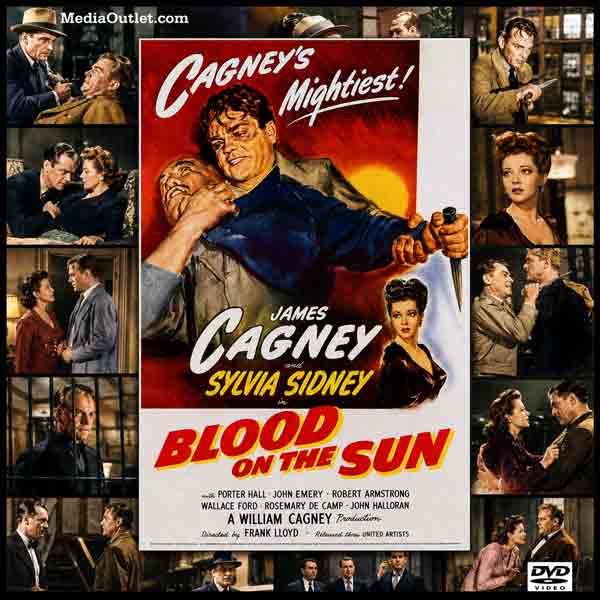
July 17, 1899: #BOTD: #HBD! James Cagney,
American actor and dancer, both on stage and in film (d. March 30,
1986) is #born James Francis Cagney Jr. on the Lower East Side of
Manhattan in New York City. His biographers disagree as to the
actual location: either on the corner of Avenue D and 8th Street,
or in a top-floor apartment at 391 East 8th Street, the address
that is on his birth certificate. His father, James Francis Cagney
Sr. (1875-1918), was of Irish descent. At the time of his son's
birth, he was a bartender and amateur boxer, although on Cagney's
birth certificate, he is listed as a telegraphist. His mother was
Carolyn Elizabeth (nee Nelson; 1877-1945); her father was a
Norwegian ship's captain, and her mother was Irish. Jimmy Cagney
had his greatest impact in film. Known for his consistently
energetic performances, distinctive vocal style, and deadpan comic
timing, he won acclaim and major awards for a wide variety of
performances. He is best remembered for playing multifaceted tough
guys in films such as The Public Enemy (1931), Taxi! (1932),
Angels with Dirty Faces (1938), and White Heat (1949), and was
typecast or limited by this view earlier in his career. In 1999,
the American Film Institute ranked him eighth among its list of
greatest male stars of the Golden Age of Hollywood. Orson Welles
said of Cagney, "[he was] maybe the greatest actor who ever
appeared in front of a camera", and Stanley Kubrick
considered him to be one of the best actors of all time. In his
first professional acting performance, Cagney danced costumed as a
woman in the chorus line of the revue Every Sailor, in 1919. He
spent several years in vaudeville as a dancer and comedian, until
he got his first major acting part in 1925. He secured several
other roles, receiving good notices, before landing the lead in
the 1929 play Penny Arcade. After rave reviews, Warner Bros.
signed him for an initial 500 USD a week, three-week contract to
reprise his role; this was quickly extended to a seven-year
contract. Cagney's seventh film, The Public Enemy, became one of
the most influential gangster movies of the period. Notable for a
famous scene in which Cagney pushes a grapefruit against Mae
Clarke's face, the film thrust him into the spotlight. He became
one of Hollywood's biggest stars and one of Warner Bros.' biggest
contracts. In 1938, he received his first Academy Award for Best
Actor nomination, for Angels with Dirty Faces, for his subtle
portrayal of the tough guy/man-child Rocky Sullivan. In 1942,
Cagney won the Oscar for his energetic portrayal of George M.
Cohan in Yankee Doodle Dandy. He was nominated a third time in
1955 for Love Me or Leave Me. Cagney retired from acting and
dancing in 1961 to spend time on his farm with his family. He came
out of retirement 20 years later for a part in the movie Ragtime
(1981), mainly to aid his recovery from a stroke. Cagney walked
out on Warner Bros. several times over the course of his career,
each time returning on much improved personal and artistic terms.
In 1935, he sued Warner for breach of contract and won. This was
one of the first times an actor prevailed over a studio on a
contract issue. He worked for an independent film company for a
year while the suit was being settled-and established his own
production company, Cagney Productions, in 1942, before returning
to Warner four years later. In reference to Cagney's refusal to be
pushed around, Jack L. Warner called him "the Professional
Againster". Cagney also made numerous morale-boosting troop
tours before and during World War II and was president of the
Screen Actors Guild for two years. James Cagney died of a heart
attack at his Dutchess County farm in Stanford, New York, on
Easter Sunday 1986; he was 86 years old. A funeral Mass was held
at St. Francis de Sales Roman Catholic Church in Manhattan. The
eulogy was delivered by his close friend, Ronald Reagan, who was
also the President of the United States at the time. His
pallbearers included boxer Floyd Patterson, dancer Mikhail
Baryshnikov (who had hoped to play Cagney on Broadway), actor
Ralph Bellamy, and director Milos Forman. Governor Mario M. Cuomo
and Mayor Edward I. Koch were also in attendance at the service.
Cagney is interred in a crypt in the Garden Mausoleum at Cemetery
Of The Gate Of Heaven in Hawthorne, New York. On Sale Until
Midnight Tonight PT!
https://store.earthstation1.com/blood-on-the-sun-1945-dvd-jimmy-cagney-wwii-m1945.html
Today's
EarthStation1.com 15% (Or More!) Off Commemorative Memorial Title:
Paul Gauguin Documentaries Set DVD, Video Download, USB Flash
Drive
Today, July 17, 2026
July 17, 1935: #BOTD: #HBD! Donald
Sutherland, Canadian actor, producer and anti-war activist whose
film career spans over six decades (d. June 20, 2024) is #born
Donald McNichol Sutherland in Saint John, New Brunswick, Canada
into a family of Scottish, German and English ancestry. Donald
McNichol Sutherland CC has received numerous accolades including a
Primetime Emmy Award, two Golden Globe Awards, and a Critics
Choice Award. He has been cited as one of the best actors never to
have received an Academy Award nomination. In 2017, he received an
Academy Honorary Award. Sutherland rose to fame after starring in
films including The Dirty Dozen (1967), M*A*S*H (1970), Kelly's
Heroes (1970), Klute (1971), Don't Look Now (1973), Fellini's
Casanova (1976), 1900 (1976), The Eagle Has Landed (1976), Animal
House (1978), Invasion of the Body Snatchers (1978), Ordinary
People (1980), and Eye of the Needle (1981). His other notable
films include A Dry White Season (1989), JFK (1991), Six Degrees
of Separation (1993), Outbreak (1995), A Time to Kill (1996),
Without Limits (1998), Space Cowboys (2000), The Italian Job
(2003), Cold Mountain (2003), Pride & Prejudice (2005), The
Mechanic (2011), and Ad Astra (2019). He gained prominence for his
role as Coriolanus Snow in The Hunger Games franchise (2012-2015).
Sutherland gained attention for his television roles. For his
portrayal of Colonel Mikhail Fetisov in Citizen X (1995) he
received the Primetime Emmy Award for Outstanding Supporting Actor
in a Limited Series or Movie. He played Adam Czerniakow in
Uprising (1998), and Clark Clifford in Path to War (2002) earning
the Golden Globe Award for Best Supporting Actor - Series,
Miniseries or Television Film. He also starred in Commander in
Chief (2005-2006), Human Trafficking (2005), Dirty Sexy Money
(2007-2009), The Pillars of the Earth (2010), Trust (2018), and
The Undoing (2020). Sutherland has received various honors
including inductions into the Canadian Walk of Fame in 2000 and
Hollywood Walk of Fame 2011. He was made an Officer of the Order
of Canada (OC) in 1978, a Commandeur of the Ordre des Arts et des
Lettres in 2012 and received the Companion of the Order of Canada
(CC) in 2019. He was the father of actors Kiefer Sutherland,
Rossif Sutherland, and Angus Sutherland. Donald Sutherland died in
Miami, Florida aged 88, following a long undisclosed illness. His
remains were cremated at Van Orsdel Crematory in Miami, and the
ashes were given to his widow Francine Racette. Kiefer Sutherland
announced his death on X/Twitter adding, "He loved what he
did and did what he loved, and one can never ask for more than
that. A life well lived". Upon hearing of his death, Canadian
Prime Minister Justin Trudeau wrote, "We've lost one of the
greats. Donald Sutherland brought a level of brilliance to his
craft few could match. A remarkable, legendary actor - and a great
Canadian". U.S. President Joe Biden wrote, "Donald
Sutherland was a beloved husband, father, grandfather, and
one-of-a-kind actor who inspired and entertained the world for
decades". Numerous members of the film industry wrote
condolences, including Jane Fonda, Alec Baldwin, William Baldwin,
Tom Blyth, Josh Brolin, Kim Cattrall, John Cusack, Michael
Douglas, Roland Emmerich, Elliott Gould, Ron Howard, John
Leguizamo, Janet Maslin, Helen Mirren, David Oyelowo, Lou Diamond
Phillips, Richard Roeper, Will Smith, Henry Winkler, Edgar Wright
and Rachel Zegler. On Sale Until Midnight Tonight PT!
https://store.earthstation1.com/paul-gaugin-the-savage-dream--legacy-of-gaugin-dvd.html
Today's
EarthStation1.com 15% (Or More!) Off Commemorative Memorial Title:
Offshore Pirate Radio 1960s-1980s MP3s DVD, Audio Download, USB
Drive
Today, July 17, 2026
July 17, 1939: #BOTD: #HBD! Spencer
Davis, Welsh singer, songwriter, harmonica player and guitarist
(d. October 19, 2020) is #born Spencer David Nelson Davies in
Swansea, South-West Wales. Spencer Davis is the founder of the
1960s beat band The Spencer Davis Group. "Davies" is
pronounced "Davis" in Wales, but would be misread as
"Davees" in the US, so professionally he dropped the E
from the spelling to avoid confusion. Spencer Davis died from
pneumonia in Los Angeles at the age of 81. His remains were
cremated, and his ashes scattered at sea (presumably the Pacific
Ocean). On Sale Until Midnight Tonight PT!
https://store.earthstation1.com/offshore-pirate-radio-2-dual-layer-mp3-dvds-uk-amp-euro23.html
Today's
EarthStation1.com 15% (Or More!) Off Commemorative Memorial Title:
It Was Twenty Years Ago Today: 1967 & Sgt. Pepper DVD MP4 USB
Drive
Today, July 17, 2026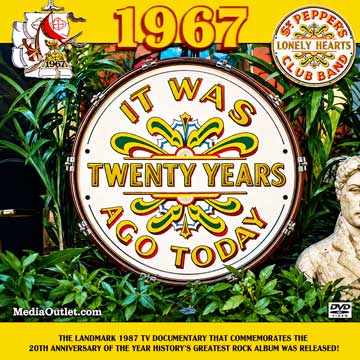
July 17, 1919: #BOTD: #HBD! Albert
Stubbins, English centre forward footballer (soccer player) (d.
December 28, 2002) is #born in Wallsend, Tyne and Wear, England,
then spent his early years in the United States, then returned to
Wallsend in 1929. He played in the position of centre forward,
although his career was limited by the onset of World War II.
While playing for Liverpool, he won the League Championship in
1947. He was later included on the front cover of The Beatles'
Sgt. Pepper's Lonely Hearts Club Band album. He attended Carville
School in Wallsend. Stubbins first played for Newcastle United in
1937, appearing in official games 30 times and scoring six goals
for the team. In wartime games (classified as friendlies) he
scored 188 goals in just 231 appearances. In 1946 he was signed by
Liverpool for a then club record of 12,500 Pounds Sterlin.
Stubbins had also been approached by Liverpool's closest rivals,
Everton, and he settled the decision with a toss of the coin. He
made an immediate impact at the club: making his debut on
September 14, 1946 in a league match at Burnden Park, he scored an
82nd-minute goal as the Reds left it late to claim a 3-1 victory
over Bolton Wanderers. Following his move to Liverpool, Stubbins
scored 28 goals (24 league goals) in the 1946-7 season (making him
joint top scorer with Jack Balmer) helping Liverpool to win the
League Championship, their first in 24 years. Stubbins also scored
24 goals the following season. Although a contractual dispute in
the 1948-9 season limited his appearances for the Merseyside club,
he then helped Liverpool reach the 1950 FA Cup Final, the first
time Liverpool had appeared at Wembley. However, they lost to
Arsenal by two goals to nil. On October 18, 1950, at Blackpool's
Bloomfield Road, Stubbins netted five goals in the Football
League's 6-3 victory over the Irish League in an exhibition match.
Injuries forced him to retire in 1953, having scored 83 goals in
178 appearances, or 1 every 2.1 games. Despite his club success,
he played for the England only once, in an unofficial
international against Wales in 1945, a game England lost 1-0.
Following his retirement, Stubbins entered a full-time career in
sports journalism, although he briefly coached an American
semi-professional side, the New York Americans in 1960. Stubbins
later appeared on the front cover of The Beatles' Sgt. Pepper's
Lonely Hearts Club Band album, the only footballer to be depicted.
He also has a Liverpool FC fan club named in his honour. He also
featured as a minor character in Stephen Baxter's time-travelling
novel The Time Ships. He died in 2002, aged 82, after a short
illness. His burial details are not publicly disclosed. On Sale
Until Midnight Tonight PT!
https://store.earthstation1.com/it-was-20-years-ago-today-1967-and-sgt-pepp201967.html
Today's
EarthStation1.com 15% (Or More!) Off Commemorative Memorial Title:
Howls, Boners And Shockers: Art Linkletter CD, MP3 Download, USB
Today, July 17, 2026
July 17, 1912: #BOTD: #HBD! Art
Linkletter, Canadian-American radio and television host (d. May
26, 2010) is #born Arthur Gordon Kelly or Gordon Arthur Kelley
(sources differ) in Moose Jaw, Saskatchewan. In his autobiography,
Confessions of a Happy Man (1960), Arthur Gordon Linkletter
revealed that he had no contact with his natural parents or his
sister or two brothers since he was abandoned when only a few
weeks old. He was adopted by Mary (nee Metzler) and Fulton John
Linkletter, an evangelical preacher. Art Linkletter was the host
of House Party, which ran on CBS radio and television for 25
years, and People Are Funny, on NBC radio and TV for 19 years.
Linkletter was famous for interviewing children on House Party and
Kids Say the Darndest Things, which led to a series of books
quoting children. Art Linkletter died at age 97 at his home in Bel
Air, Los Angeles, California. His remains were cremated, and his
ashes were given to his widow Lois Foerster Linkletter. After his
death, Phyllis Diller stated, "In a couple of months Art
Linkletter would have been 98 years old, a full life of fun and
goodness, an orphan who made it to the top. What a guy." He
was survived by his wife Lois, and daughters Dawn Griffin and
Sharon Linkletter, as well as seven grandchildren and 15
great-grandchildren. Alexis Linkletter, his oldest great
grandchild, has pursued a career in broadcasting and hosts a
number of popular crime podcasts and produces documentary
television. On Sale Until Midnight Tonight PT!
https://store.earthstation1.com/howls-boners-and-shockers-art-linkletter-mp3-c3.html
Today's
EarthStation1.com 15% (Or More!) Off Commemorative Memorial Title:
The Great War (1964) TV Documentary Series DVD, Video Download,
USB
Today, July 17, 2026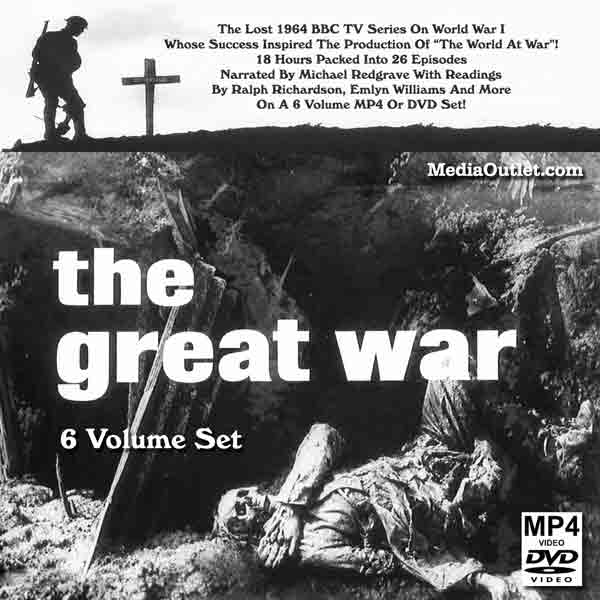
July 17, 1917: World War I: The Home
Front During World War I: The United Kingdom Home Front During
World War I: -- In the face of a rising tide of anti-German
sentiment in the UK, King George V issues a Proclamation stating
that the male line descendants of the British Royal Family will
bear the surname Windsor, thereby founding the British Royal House
Of Windsor. The House Of Windsor is currently the reigning royal
house of the United Kingdom and the other Commonwealth realms. The
dynasty is of German paternal descent and was originally a branch
of the House of Saxe-Coburg and Gotha, itself derived from the
House of Wettin, which succeeded the House Of Hanover to the
British monarchy following the death of Queen Victoria, wife of
Albert, Prince Consort. The name was changed from Saxe-Coburg and
Gotha to the English Windsor (from "Windsor Castle") in
1917 because of anti-German sentiment in the British Empire during
World War I. During the reign of the Windsors, major changes took
place in British society. The British Empire participated in the
First and Second World Wars, ending up on the winning side both
times, but subsequently lost its status as a superpower during
decolonisation. Much of Ireland broke with the United Kingdom and
the remnants of the Empire became the Commonwealth of Nations. The
current head of the house is monarch of sixteen sovereign states.
These are the United Kingdom (where they are based), Canada,
Australia, New Zealand, Jamaica, Barbados, the Bahamas, Grenada,
Papua New Guinea, Solomon Islands, Tuvalu, Saint Lucia, Saint
Vincent and the Grenadines, Belize, Antigua and Barbuda, and Saint
Kitts and Nevis. As well as these separate monarchies, there are
also three Crown dependencies, fourteen British Overseas
Territories and two associated states of New Zealand. On Sale
Until Midnight Tonight PT!
https://store.earthstation1.com/the-great-war-dvd-set-1964-wwi-tv-series-26-shows-1964266.html
Today's
EarthStation1.com 15% (Or More!) Off Commemorative Memorial Title:
Joan Of Arc Biography + You Are There Bonus MP4 Video Download DVD
Today, July 17, 2026
July 17, 1429: The Crisis Of The Late
Middle Ages: The Anglo-French Wars (1109-1815): The Hundred Years'
War (French: Guerre de Cent Ans [1337-1453]): The French Monarchy
(The Monarchy Of The Kingdom Of France): Coronations: --
Coronations: Coronations Of The French Monarch: Charles VII Of
France is crowned the King of France in the Reims Cathedral after
a successful campaign by Joan Of Arc. Charles VII (February 22,
1403 - July 22, 1461), called the Victorious (French: le
Victorieux) or the Well-Served (le Bien-Servi), was King of France
from 1422 to his death in 1461. His reign saw the end of the
Hundred Years' War and a de facto end of the English claims to the
French throne. In the midst of the Hundred Years' War, Charles VII
inherited the throne of France under desperate circumstances.
Forces of the Kingdom of England and the duke of Burgundy occupied
Guyenne and northern France, including Paris, the most populous
city, and Reims, the city in which French kings were traditionally
crowned. In addition, his father, Charles VI, had disinherited him
in 1420 and recognized Henry V of England and his heirs as the
legitimate successors to the French crown. At the same time, a
civil war raged in France between the Armagnacs (supporters of the
House of Valois) and the Burgundian party (supporters of the House
of Valois-Burgundy, which was allied to the English). With his
court removed to Bourges, south of the Loire River, Charles was
disparagingly called the "King of Bourges", because the
area around this city was one of the few remaining regions left to
him. However, his political and military position improved
dramatically with the emergence of Joan of Arc as a spiritual
leader in France. Joan and other charismatic figures led French
troops to lift the sieges of Orleans and other strategic cities on
the Loire river, and to crush the English at the battle of Patay.
With the local English troops dispersed, the people of Reims
switched allegiance and opened their gates, which enabled the
coronation of Charles VII at Reims Cathedral in 1429. Six years
later, he ended the English-Burgundian alliance by signing the
Treaty of Arras with Burgundy, followed by the recovery of Paris
in 1436 and the steady reconquest of Normandy in the 1440s using a
newly organized professional army and advanced siege cannons.
Following the battle of Castillon in 1453, the French expelled the
English from all their continental possessions except the Pale of
Calais. The last years of Charles VII were marked by conflicts
with his turbulent son, the future Louis XI of France. On Sale
Until Midnight Tonight PT!
https://store.earthstation1.com/joan-of-arc-documentary-mp4-video-download-dv4.html
Today's
EarthStation1.com 15% (Or More!) Off Commemorative Memorial Title:
The Monarchy: British Royal Family History TV Series DVD MP4 USB
Drive
Today, July 17, 2026
July 17, 1947: #BOTD: #HBD! Camilla,
Queen Of The United Kingdom and the 14 other Commonwealth realms
as the wife of King Charles III, is #born Camilla Rosemary Shand
at King's College Hospital, London, England. Camilla was raised in
East Sussex and South Kensington in England and educated in
England, Switzerland, and France. In 1973, she married British
Army officer Andrew Parker Bowles, at which point her name became
for the term of their marriage Camilla Rosemary Parker Bowles;
they divorced in 1995. Camilla and Charles were romantically
involved periodically, both before and during each of their first
marriages. Their relationship was highly publicised in the media
and attracted worldwide scrutiny. In 2005, Camilla married Charles
in the Windsor Guildhall, which was followed by a televised
Anglican blessing at St George's Chapel in Windsor Castle. From
the marriage until her husband's accession, she was known as
Duchess of Cornwall. Upon the death of Queen Elizabeth II on
September 8, 2022, Charles became king with Camilla as queen
consort. Their coronation took place at Westminster Abbey on 6 May
2023. Camilla carries out public engagements representing the
monarchy, often alongside her husband. She is also the patron, the
president, or a member, of numerous charities and organisations.
Since 1994, Camilla has campaigned to raise awareness of
osteoporosis, which has earned her several honours and awards. She
has also campaigned to raise awareness of issues such as rape,
sexual abuse, illiteracy, animal welfare, and poverty. On Sale
Until Midnight Tonight PT!
https://store.earthstation1.com/the-monarchy-3-part-british-royal-family-tv-series-dvd-mp4-u34.html
Today's
EarthStation1.com 15% (Or More!) Off Commemorative Memorial Title:
Color Adjustment 40 Years Of Black America On Broadcast TV DVD MP4
USB
Today, July 17, 2026
July 17, 1935: #BOTD: #HBD! Diahann
Carroll, African American actress, singer, model, activist and
beauty (d. October 4, 2019) is #born Carol Diann Johnson in the
Bronx, New York City. She rose to prominence in some of the
earliest major studio films to feature black casts, including
Carmen Jones (1954) and Porgy and Bess (1959). In 1962, Carroll
won a Tony Award for best actress, a first for an African American
woman, for her role in the Broadway musical No Strings. In 1974
she starred in Claudine alongside James Earl Jones for which she
received an Academy Award for Best Actress nomination. Her 1968
debut in Julia, the first series on American television to star a
Black woman in a non-stereotypical role, was a milestone both in
her career and the medium. In the 1980s, she played the role of
Dominique Deveraux, a mixed-race diva, in the prime time soap
opera Dynasty. Carroll was the recipient of numerous stage and
screen nominations and awards, including the Golden Globe Award
for Best Actress In a Television Series in 1968. Diahann Carroll
died of breast cancer at her home in West Hollywood, California at
the age of 84. Carroll also had dementia at the time of her death,
though actor Marc Copage, who played her character's son on her
television series Julia, said that she did not appear to show
serious signs of cognitive decline as late as 2017. She is buried
at Woodlawn Cemetery in The Bronx, New York. On Sale Until
Midnight Tonight PT!
https://store.earthstation1.com/color-adjustment-40-years-of-black-americans-on-tv-dvd-download-u40.html
Today's
EarthStation1.com #OnThisDay Commemorative Memorial Title: Black
Civil Rights Films: African-American History DVD, MP4, USB Stick
Today, July 17, 2026 ( #JCKaelin here: One of the last things
John Lewis did before he died was to gift me with his "MARCH"
boxed set along with a thank you note [both of which I reverently
showed to all of my black colleagues at the Bayonne Post Office
when it arrived at my P.O. box], for which I will be forever
grateful and - as he intended - forever working to be worthy of
his faith in me :) . John Lewis was as excellent a role model of a
great man that as ever there was. He was a kind supporter and
customer of our website; in 1996, one of my first online civil
rights projects was the world's first streaming video of the brave
turning point March 7, 1965 "Bloody Sunday" attack at
the Edmund Pettus Bridge during The Selma To Montgomery Marches
that fractured his skull and scarred his head for life; it was my
vigorous defense of Mr. Lewis on social media after the 2016
Presidential Election that brought me to his attention, and to
that of Black Lives Matter, whose Philadelphia, Pennsylvania
chapter asked me to form a chapter in Bayonne, New Jersey
immediately following (which I declined, explaining that the
history of white-run black rights organizations was a very poor
one, but that I'd gladly serve as the lowest-ranking foot soldier
of any such chapter to prove the point that a white man would
choose to do what black folks told him to do {which is the best
witness for a white BLM member to do, isn't it?) -- cementing my
then twenty-year long career as an online civil rights media
historian activist that was to prove to have long-lasting effects,
enduring all these years since. ========= July 17, 2020: #DOTD:
#RIP: John Lewis, African American activist, politician and
prominent civil rights leader (b. February 21, 1940) #dies, the
final surviving "Big Six" civil rights icon, at the age
of 80 in Atlanta after an eight-month battle with pancreatic
cancer, on the same day and in the same city as his friend and
fellow civil rights activist C. T. Vivian died. He is buried at
South View Cemetery in Atlanta, Georgia; C. T. Vivian is buried at
Westview Cemetery also in Atlanta. John Lewis was #born John
Robert Lewis on February 21, 1940 near Troy, Alabama, the third of
ten children of Willie Mae (nee Carter) and Eddie Lewis. His
parents were sharecroppers in rural Pike County, Alabama. John
Lewis was the U.S. Representative for Georgia's 5th congressional
district, serving from 1987 until his death, and was the dean of
the Georgia congressional delegation. His district included
three-quarters of Atlanta. Lewis, who as chairman of the Student
Nonviolent Coordinating Committee (SNCC) was one of the "Big
Six" leaders of groups who organized the 1963 March on
Washington, played many key roles in the Civil Rights Movement and
its actions to end legalized racial segregation in the United
States. He is a member of the Democratic Party leadership in the
U.S. House of Representatives and has served as a Chief Deputy
Whip since 1991 and Senior Chief Deputy Whip since 2003. Lewis has
been awarded many honorary degrees and is the recipient of
numerous awards from eminent national and international
institutions, including the highest civilian honor, the
Presidential Medal Of Freedom.
https://store.earthstation1.com/black-civil-rights-films-africanamerican-history-dvd.html
Today's
EarthStation1.com #OnThisDay Commemorative Memorial Title: Eyes On
The Prize II: America At The Racial Crossroads DVD MP4 USB
Today, July 17, 2026July 17, 2020: #DOTD: #RIP: C. T. Vivian,
American civil rights icon, Baptist minister, author, disciplined
advocate of nonviolence in the battle for racial justice and
voting rights, close friend and lieutenant of Martin Luther King
Jr. during the civil rights movement, whom King called "the
greatest preacher to ever live" (b. July 30, 1924) #dies of
natural causes in Atlanta, two weeks before his 96th birthday, and
on the same day and same city that his friend and fellow activist,
John Lewis, died. He is buried at Westview Cemetery in Atlanta,
Georgia; John Lewis is buried at South View Cemetery, also in
Atlanta. He was born Cordy Tindell Vivian in Boonville, Missouri.
C. T. Vivian was the first Black, non-elected man to lie in state
at the Georgia State Capitol. He was buried at Westview Cemetery
in Atlanta. Vivian resided in Atlanta, Georgia, and founded the C.
T. Vivian Leadership Institute, Inc. He was a member of the Alpha
Phi Alpha fraternity, the first intercollegiate historically
African American fraternity.
https://store.earthstation1.com/eyes-on-the-prize-ii-dvd-set-4-discs-complete-2nd-seri42.html
Today's
EarthStation1.com #OnThisDay Commemorative Memorial Title: World
War II With Walter Cronkite TV Series DVD, Download, USB Drive
Today, July 17, 2026July 17, 2009: #DOTD: #RIP: Walter
Cronkite, American print and broadcast journalist, news anchor,
documentary host and actor from a Freemasonic family (b. November
4, 1916) #dies at his home in New York City aged 92, his death
believed to caused by cerebrovascular disease. Cronkite's funeral
took place on July 23, 2009, at St. Bartholomew's Church in
midtown Manhattan, New York City. Among many journalists who
attended were Tom Brokaw, Connie Chung, Katie Couric, Charles
Gibson, Matt Lauer, Dan Rather, Andy Rooney, Morley Safer, Diane
Sawyer, Bob Schieffer, Meredith Vieira, Barbara Walters, and Brian
Williams. At his funeral, his friends noted his love of music,
including, recently, drumming. He was cremated and his remains
buried next to his wife, Betsy, in the family plot in Kansas City.
Walter Cronkite was born Walter Leland Cronkite Jr. in St. Joseph,
Missouri. He served as anchorman for the CBS Evening News for 19
years (1962-1981). During the heyday of CBS News in the 1960s and
1970s, he was often cited as "the most trusted man in
America" after being so named in an opinion poll. He was a
leading correspondent for United Press International during World
War II. He reported many events from 1937 to 1981, including
bombings in World War II; the Nuremberg trials; combat in the
Vietnam War; the Dawson's Field hijackings; Watergate; the Iran
Hostage Crisis; and the assassinations of President John F.
Kennedy, civil rights pioneer Martin Luther King Jr., and Beatles
musician John Lennon. He was also known for his extensive coverage
of the U.S. space program, from Project Mercury to the Moon
landings to the Space Shuttle. He was the only non-NASA recipient
of an Ambassador of Exploration award. Cronkite is well known for
his departing catchphrase "And that's the way it is,"
followed by the broadcast's date.
https://store.earthstation1.com/world-war-ii-with-walter-cronkite-dvd-set-all-8-discsht8.html
Today's
EarthStation1.com #OnThisDay Commemorative Memorial Title: Outer
Space Films 7 The Space Shuttle DVD, MP4 Download, USB Drive
Today, July 17, 2026July 17, 2014: #DOTD: #RIP: Henry
Hartsfield, nicknamed Hank, United States Air Force colonel, test
pilot and NASA astronaut who logged over 7,400 hours of flying
time - of which over 6,150 hours are in the North American F-86
Sabre, North American F-100 Super Sabre, Lockheed F-104
Starfighter, Republic F-105 Thunderchief, Convair F-106 Delta
Dart, Lockheed T-33, and Northrop T-38 Talon jet aircraft - and
over 480 hours in space (b. November 21, 1933) #dies in Houston,
Texas aged 80 from complications from back surgery. He is buried
at Arlington National Cemetery in Arlington, Virginia. Henry
Hartsfield was born Henry Warren Hartsfield Jr. in Birmingham,
Alabama. He flew in NASA's Space Shuttle three times, including
the last test flight: STS-4 (Space Shuttle Columbia), STS-41-D
(Space Shuttle Discovery), and STS-61 (the last successful flight
of Space Shuttle Challenger). Hartsfield received his commission
through the Reserve Officer Training Corps (ROTC) at Auburn
University. He entered the U.S. Air Force in 1955, and his
assignments included a tour with the 53rd Tactical Fighter
Squadron in Bitburg, West Germany. He is also a graduate of the
U.S. Air Force Test Pilot School at Edwards Air Force Base,
California, and was an instructor there prior to his assignment in
1966 to the USAF Manned Orbiting Laboratory (MOL) program as an
astronaut. After the cancellation of the MOL program in June 1969,
he was reassigned to NASA. Hartsfield became part of NASA
Astronaut Group 7 in September 1969. He was a member of the
astronaut support crew for Apollo 16 and served as a member of the
astronaut support crew for the Skylab-2, -3, and -4 missions. He
also was a CAPCOM on STS-1. Hartsfield retired in August 1977 from
the United States Air Force with more than 22 years of active
service but continued his assignment as a NASA astronaut in a
civilian capacity. He was a member of the orbital flight test
missions group of the Astronaut Office and was responsible for
supporting the development of the Space Shuttle's entry flight
control system and its associated interfaces. Hartsfield served as
backup pilot for STS-2 and STS-3, Columbia's second and third
orbital flight tests. Hartsfield was the pilot on STS-4, the
fourth and final orbital test flight of the shuttle Columbia,
which launched from Kennedy Space Center, Florida, on June 27,
1982. Hartsfield was next spacecraft commander of STS-41-D which
launched from Kennedy Space Center, Florida, on August 30, 1984.
On his third flight, Hartsfield was spacecraft commander of
Challenger on STS-61-A, the West German Spacelab D-1 mission which
launched from Kennedy Space Center, Florida, on October 30, 1985.
With the completion of this flight, Hartsfield had logged 483
hours in space. Hartsfield retired from NASA in 1998 and then
joined the executive ranks of Raytheon Company as vice president
of aerospace engineering services. He retired from Raytheon in
2005.
https://store.earthstation1.com/outer-space-films-7-the-space-shuttle-dv7.html
Today's
EarthStation1.com #OnThisDay Commemorative Memorial Title:
Murphy's Law: An Investigative Documentary DVD, Download, USB
Drive
Today, July 17, 2026July 17, 1990: #DOTD: #RIP: Edward A.
Murphy Jr., American aircraft pilot and aerospace engineer who
worked on safety-critical systems, best known for his namesake
"Murphy's Law", which is said to state, "Anything
that can go wrong will go wrong" (b. January 11, 1918) #dies
in Los Angeles, California, at the age of 72. He is buried at Los
Angeles National Cemetery in Los Angeles. Edward A. Murphy Jr. was
born Edward Aloysius Murphy Jr. in the Panama Canal Zone, the
eldest of five children. He graduatied the United States Military
Academy at West Point in 1940, after attending high school in New
Jersey. The same year he accepted a commission into the United
States Army, and undertook pilot training with the United States
Army Air Corps in 1941. During World War II he served in the
Pacific Theater, India, China and Burma (now known as Myanmar),
achieving the rank of major. Following the end of hostilities, in
1947 Murphy attended the United States Air Force Institute of
Technology, becoming R & D Officer at the Wright Air
Development Center of Wright-Patterson Air Force Base. It was
while here that he became involved in the high-speed rocket sled
experiments (USAF project MX981, 1949) which led to the coining of
Murphy's law. Murphy himself was reportedly unhappy with the
commonplace interpretation of his law, which is seen as capturing
the essential "cussedness" of inanimate objects. Murphy
regarded the law as crystallizing a key principle of defensive
design, in which one should always assume worst-case scenarios.
Murphy was said by his son to have regarded the many jocular
versions of the law as "ridiculous, trivial and erroneous".In
1952, having resigned from the United States Air Force, Murphy
carried out a series of rocket acceleration tests at Holloman Air
Force Base, then returned to California to pursue a career in
aircraft cockpit design for a series of private contractors. He
worked on crew escape systems for some of the most famous
experimental aircraft of the 20th century, including the F-4
Phantom II, the XB-70 Valkyrie, the SR-71 Blackbird, the B-1
Lancer, and the X-15 rocket plane. During the 1960s, he worked on
safety and life support systems for Project Apollo, and ended his
career with work on pilot safety and computerized operation
systems on the Apache helicopter.
https://store.earthstation1.com/murphy39s-law-an-investigative-documentary-into-its-history-amp-scien39.html
Today's
EarthStation1.com #OnThisDay Commemorative Memorial Title: The
History Of Jazz A Video Retrospective DVD, MP4 Download, USB Drive
Today, July 17, 2026July 17, 1967: #DOTD: #RIP: John
Coltrane, nicknamed "Trane", African American
saxophonist and composer who worked in the bebop and hard bop
idioms early in his career, pioneer of modes in jazz and
ultimately at the forefront of free jazz (b. September 23, 1926)
#dies of liver cancer at the age of 40 at Huntington Hospital on
Long Island. His funeral was held four days later at St. Peter's
Lutheran Church in New York City. The service was started by the
Albert Ayler Quartet and finished by the Ornette Coleman Quartet.
Coltrane is buried at Pinelawn Cemetery in Farmingdale, New York.
John Coltrane led at least fifty recording sessions during his
career, and appeared as a sideman on many albums by other
musicians, including trumpeter Miles Davis and pianist Thelonious
Monk. As his career progressed, Coltrane and his music took on an
increasingly spiritual dimension. Coltrane influenced innumerable
musicians, and remains one of the most significant saxophonists in
music history. He received many posthumous awards and
recognitions, including canonization by the African Orthodox
Church as Saint John William Coltrane and a special Pulitzer Prize
in 2007. His second wife was pianist Alice Coltrane and their son
Ravi Coltrane is also a saxophonist.
https://store.earthstation1.com/the-history-of-jazz-by-billy-taylor-parts-i-amp-ii-dvd.html
Today's
EarthStation1.com #OnThisDay Commemorative Memorial Title: Command
Performance WWII Old Time Radio Series MP3 DVD, Download, USB
Today, July 17, 2026July 17, 1987: #DOTD: #RIP: Howard
McGhee, African American jazz trumpeter (b. March 6, 1918) #dies
of non-communicable disease at Mount Sinai Hospital in New York
City at the age of 69. A memorial service was held for him on July
24, 1987. His burial details are not publicly disclosed. Howard
McGhee was born in Tulsa, Oklahoma. Raised in Detroit, Michigan,
he was one of the first bebop jazz trumpeters, along with Dizzy
Gillespie, Fats Navarro and Idrees Sulieman. He was known for his
fast fingering and high notes. He had an influence on younger
bebop trumpeters such as Fats Navarro. During his career, he
played in bands led by Lionel Hampton, Andy Kirk, Count Basie and
Charlie Barnet. He was in a club listening to the radio when he
first heard Charlie Parker and was one of the earliest adopters of
the new style, a fact that was disapproved by older musicians like
Kid Ory. In 1946-1947, some record sessions for the new label Dial
were organized in Hollywood, with Charlie Parker and McGhee. The
first was held on July 29, 1946. The musicians were Charlie
Parker, Howard McGhee, Jimmy Bunn, Bob Kesterson, and Roy Porter.
With Parker's health near to collapse, he played "Max is
Making Wax", "Lover Man", and "The Gypsy".
McGhee continued to work as a sideman with Parker. He played on
such titles as "Cheers", "Carvin the Bird",
"Stupendous", and the landmark recording that jazz
historian Phil Schapp said was the most important and exemplary
bebop title, "Relaxin' at Camarillo". Around this time,
McGhee was a leading musician in the Los Angeles bebop scene,
participating in many concerts, recording, and even managing a
night club for a period. His stay in California ended because of
racial prejudice, particularly vicious towards McGhee as half of a
mixed-race couple. Drug problems sidelined McGhee for much of the
1950s, but he resurfaced in the 1960s, appearing in many George
Wein productions. His career sputtered again in the mid-1960s and
he did not record again until 1976. He led one of three big jazz
bands trying to succeed in New York in the late 1960s. While the
band did not survive, a recording was released in the mid-1970s.
He taught music through the 1970s, both in classrooms and at his
apartment in midtown Manhattan and instructed musicians like
Charlie Rouse in music theory. He was as much an accomplished
composer-arranger as he was a performer.
https://store.earthstation1.com/command-performance-in-world-war-ii-radio-broadcasts-mp3-c3.html
Today's
EarthStation1.com #OnThisDay Commemorative Memorial Title: Rock &
Roll An Unruly History 10 Part TV Series MP4 Video Download DVD
Today, July 17, 2026July 17, 1996: #DOTD: #RIP: Chas
Chandler, English musician, record producer and manager, best
known as the original bassist in The Animals, for which he was
inducted into the Rock and Roll Hall of Fame in 1994 (b. December
18, 1938) #dies of an aortic aneurysm aged 57 at Newcastle General
Hospital in Newcastle, England, days after performing a solo show.
He is buried at Preston Cemetery And Tynemouth Crematorium in
North Shields, Metropolitan Borough of North Tyneside, Tyne and
Wear, England. Chandler's former home at 35 Second Avenue, Heaton,
hosts a blue plaque placed on the wall by Newcastle City Council,
which reads: "Chas Chandler 1938-1996. Founder member of the
'Animals'. Manager of Jimi Hendrix & Slade. Co-founder of
Newcastle Arena. Lived in this house 1938-1964." He was born
Bryan James Chandler in Heaton, Newcastle. After leaving school,
he worked as a turner in the Tyneside shipyards. He became the
bass player with The Alan Price Trio in 1962. After Eric Burdon
joined the band, the Alan Price Trio was renamed The Animals.
Chandler's bass lines were rarely given critical attention but
some, including the opening riff of the group's 1965 hit "We
Gotta Get Out of This Place" subsequently received praise.
Chandler was also the most prominent of the group's backing
vocalists and did occasional songwriting with Burdon. In 1966,
despite commercial success, Chandler became disillusioned with the
lack of money, recalling that, "We toured non-stop for three
years, doing 300 gigs a year and we hardly got a penny."
After The Animals underwent personnel changes in 1966, Chandler
turned to becoming a talent scout, artist manager, and record
producer. During his final tour with The Animals, Chandler saw a
then-unknown Jimi Hendrix play in Cafe Wha?, a Greenwich Village,
New York City nightclub. At the time Hendrix was performing under
the name Jimmy James. In September, Chandler convinced Hendrix to
accompany him to Britain, which was made possible with the help of
Michael Jeffery, who suggested that he revert to his actual name,
and later suggested naming the band the Jimi Hendrix Experience.
In Britain, Chandler recruited bassist Noel Redding and drummer
Mitch Mitchell as the other members of the Experience. His
enthusiasm fuelled Hendrix during the early days, but halfway
through the recording of his third album in 1968, Electric
Ladyland, much had changed within the band's framework. Chandler
was a key figure in Hendrix's rise to critical and commercial
success. Chandler provided the young musician with living
accommodations and financed the Experience's first single "Hey
Joe", before they had a recording contract. He was also
instrumental in introducing Hendrix to Eric Clapton. It was
through this introduction that Hendrix was given the opportunity
to play with Clapton and Cream on stage. It was Chandler's idea
for Hendrix to set his guitar on fire, which made national news
when this idea was used at a concert at the Finsbury Park Astoria
Theatre and subsequently at the Monterey Pop festival. Hendrix's
sound engineer Eddie Kramer later recalled that Chandler was very
hands-on with the first two Hendrix albums, adding that "he
was his mentor and I think it was very necessary." By 1968,
Chandler had become frustrated with the recording sessions for
Hendrix's album Electric Ladyland, claiming they were
self-indulgent. He left management services in the hands of
Jeffery during the following year. Chandler then managed and
produced the British rock band Slade for 12 years, during which
they achieved six number one chart hits in the UK. Chandler and
Slade parted company following the failure of the "Knuckle
Sandwich Nancy" single in May 1981. He would, however
negotiate their RCA contract which lasted for four new albums.
Chandler bought IBC Studios which he renamed Portland Recording
Studios, after the studio address of 35 Portland Place, London and
ran it for four years until he sold it to Don Arden. Chandler also
ran a series of record labels from the studios including Barn
Records, Six of the Best and Cheapskate Records. He formed a music
publishing agency, as well as a production company and management
companies. He also had a brief stint in which he produced the
Philadelphia-based rock group Horsepower, founded by Michael James
Kennedy in 1978. In 1977, Chandler played and recorded with The
Animals during a brief reunion and he joined them again for a
further revival in 1983, at which point he sold his business
interests, in order to concentrate on being a musician. During the
early 1990s, he helped finance the development of Newcastle Arena,
a 10,000 seat sports and entertainment venue which opened in 1995.
https://store.earthstation1.com/rock-amp-roll-an-unruly-history-10-part-tv-series-mp4-video-download-104.html
Today's
EarthStation1.com #OnThisDay Commemorative Memorial Title:
Alternative Sgt. Pepper's Lonely Hearts Club Band MP3 CD Download
USB
Today, July 17, 2026July 17, 1965: #DOTD: #RIP: Simon Rodia,
Italian-American artist who appears on the iconic cover of the
Sgt. Pepper's Lonely Hearts Club album by The Beatles (top right
corner, to the left of and behind Bob Dylan), creator of the Watts
Towers, or, as he called them, Nuestro Pueblo (Our Town, in
Spanish), a Los Angeles landmark (b. February 12, 1879) #dies at
the age of 90 in Martinez, California. He is buried at Saint
Catherine Of Siena Cemetery in Martinez. Simon Rodia was born
Sabato Rodia in Serino, Italy, where he was raised. In 1895, aged
fifteen, he emigrated to the United States with his brother. Rodia
lived in Pennsylvania until his brother died in a mining incident.
He then moved to Seattle, Washington, where he married Lucia Ucci
in 1902. They soon moved to Oakland, where Rodia's three children
were born. Following his divorce around 1909, he moved to Long
Beach and worked at odd jobs before finally settling in Watts in
1920. Rodia began constructing the Watts Towers in 1921. There has
been some question as to what Rodia was called during his
lifetime; some sources have cited that his birth name was
"Sabatino" and it is disputed as to if he was called
"Simon" during his lifetime. It is widely known and
accepted that he was referred to as "Sam" by close
friends. He appears as Samuel Rodia (and still living in Oakland)
in the 1910 U.S. Census, but by the time of the 1920 U.S. Census,
he had already become Sam Rodia. His surname has also been
misspelled as "Rodella" or "Rodilla". The
Watts Towers, Towers of Simon Rodia, or Nuestro Pueblo ("our
town" in Spanish) are a collection of 17 interconnected
sculptural towers, architectural structures, and individual
sculptural features and mosaics within the site of the artist's
original residential property at 1765 East 107th Street in Watts,
Los Angeles. The entire site of towers, structures, sculptures,
pavement and walls were designed and built solely by Sabato
("Simon" or "Sam") Rodia (1879 or 1886 to
1965), an Italian immigrant construction worker and tile mason,
over a period of 33 years from 1921 to 1954. The tallest of the
towers is 99.5 feet (30.3 m). The work is an example of outsider
art (or Art Brut) and Italian-American naive art. The Watts Towers
were designated a National Historic Landmark and a California
Historical Landmark in 1990. They are also a Los Angeles
Historic-Cultural Monument, and one of nine folk art sites listed
in the National Register of Historic Places in Los Angeles. The
Watts Towers of Simon Rodia State Historic Park encompasses the
Watts Towers site.
https://store.earthstation1.com/alternative-sgt-pepper39s-lonely-hearts-club-band-mp3-cd-download-393.html
Today's
EarthStation1.com #OnThisDay Commemorative Memorial Title: G-Men:
The Rise Of J. Edgar Hoover DVD, Video Download, USB Drive
Today, July 17, 2026July 17, 1954: #DOTD: Machine Gun Kelly,
American prohibition-era gangster from Memphis, Tennessee (b. July
18, 1900) #dies of a heart attack the day before his 54th birthday
at the United States Penitentiary, Leavenworth. He is buried in
Cottondale Cemetery in Cottondale, Texas. Machine Gun Kelly was
born George Kelly Barnes in Cleveland, Ohio; his nickname came
from his favorite weapon, a Thompson submachine gun. His most
infamous crime was the kidnapping of oil tycoon and businessman
Charles F. Urschel and his friend Walter R. Jarrett in July 1933
for which he, and his gang, collected a 200K USD ransom. Their
victim had collected and left considerable evidence that assisted
the subsequent FBI investigation that eventually led to Kelly's
arrest in Memphis, Tennessee, on September 26, 1933. The Kellys
held Urschel at the farm of Kathryn's mother and step-father.
Urschel, having been blindfolded, made note of evidence of his
experience including remembering background sounds, counting
footsteps and leaving fingerprints on surfaces in reach. This
proved invaluable for the FBI in its investigation, as agents
concluded that Urschel had been held in Paradise, Texas, based on
sounds that Urschel remembered hearing while he was being held
hostage. An investigation conducted at Memphis disclosed that the
Kellys were living at the residence of J. C. Tichenor. Special
agents from Birmingham, Alabama, were immediately dispatched to
Memphis, where, in the early morning hours of September 26, 1933,
a raid was conducted. George and Kathryn Kelly were taken into
custody by FBI agents and Memphis police. Caught without a weapon,
Kelly surrenders to the FBI as he repeatedly shouted out "Don't
shoot, G-Men!". G-Man (short for "Government Man"),
an American slang term which had applied to all federal
investigators and special agents of the United States Government,
thereby became synonymous with Federal Bureau of Investigation
(FBI) agents.
https://store.earthstation1.com/gmen-the-rise-of-j-edgar-hoover-dvd.html
Today's
EarthStation1.com #OnThisDay Commemorative Memorial Title: RMS
Titanic Documentaries DVD, Video Download, USB Flash Drive
Today, July 17, 2026July 17, 1918: The European Civil War:
World War I: The First European War (The European Theater Of World
War I): The Western Front Of World War I: Naval Warfare Of World
War I: The U-boat Campaign (The U-boat Campaign 1914-1918): --
#DOTD: #RIP: The RMS Carpathia, the ship that rescued the 705
survivors from the RMS Titanic, is sunk off Ireland by the German
SM U-55; five lives are lost. RMS Carpathia was a Cunard Line
transatlantic passenger steamship built by Swan Hunter and Wigham
Richardson. Carpathia made her maiden voyage in 1903 from
Liverpool to Boston (Massachusetts), and continued on this route
before being transferred to Mediterranean service in 1904. In
1912, she became famous for rescuing the survivors of rival White
Star Line's RMS Titanic after she struck an iceberg and sank with
a loss of 1,517 lives. Carpathia braved dangerous ice fields and
diverted all steam power to her engines in her rescue mission. She
arrived two hours after Titanic had sunk and rescued 705 survivors
from the ship's lifeboats. Carpathia herself was sunk on 17 July
1918 after being torpedoed by the German submarine SM U-55 off the
Irish coast in World War I with a loss of five crewmembers. On 15
July 1918, Carpathia departed Liverpool in a convoy bound for
Boston carrying 57 passengers (36 saloon class and 21 steerage)
and 166 crew. At 9:15 a.m. on the morning of 17 July, while
sailing in the Southwest Approaches she was torpedoed near the No.
3 hatch on the port side by the Imperial German Navy submarine
U-55, followed by a second which penetrated the engine room,
killing three firemen and two trimmers. As Carpathia began to
settle by the head and list to port, Captain William Prothero gave
the order to abandon ship. All passengers and the surviving crew
members boarded the lifeboats as the vessel sank. There were 218
survivors. U-55 surfaced and fired a third torpedo into the ship
near the gunner's rooms, resulting in a large explosion that
doomed the ship. U-55 started approaching the lifeboats when the
Azalea-class sloop HMS Snowdrop arrived on the scene and drove
away the submarine with gunfire before picking up the survivors
from Carpathia. Carpathia sank at 11:00 AM at a position recorded
by Snowdrop as 49_25'N 10_25'W, approximately 120 mi (190 km) west
of Fastnet. At the time of her sinking, Carpathia was the fifth
Cunard steamship sunk in as many weeks; the others being the
Ascania, Ausonia, Dwinsk, and Valentia, leaving only five
Cunarders afloat from the large pre-war fleet. SM U-55 was one of
the six Type U-51 U-boats of the Imperial German Navy during the
First World War. U-55 was ordered from Germaniawerft, Kiel on 23
August 1914, was laid down on 28 December 1914 and launched on 18
March 1916. She was commissioned under her first commander Wilhelm
Werner on 8 June 1916. Werner commanded her for most of her
wartime career, during which she undertook 14 patrols with II
Flotilla, sinking 64 ships for a total of 130,387 GRT. She also
damaged another five for a total of 25,568 gross register tons
(GRT), and took another two as prizes for a total of 4,616 GRT.
Her most famous act was the sinking of the British passenger liner
RMS Carpathia. Werner was replaced by Alexander Weiss on 10 August
1918, Weiss being succeeded by Hans Friedrich on 15 September and
commanding U-55 until the armistice on 11 November. U-55 was
surrendered to Japan on 26 November 1918. She entered service with
the Imperial Japanese Navy in 1920 as O3, serving as such until
1921. She was dismantled at the Sasebo Navy Yard between March and
June 1921, briefly recommissioning in 1923 as Auxiliary Vessel No.
2538.
https://store.earthstation1.com/titanic-documentaries-dvd.html
Today's
EarthStation1.com #OnThisDay Commemorative Memorial Title: WABC
Radio Airchecks MP3 Collection 1960s-1980s DVD, MP3 Download, USB
Today, July 17, 2026July 17, 1950: #BOTD #HBD! Phoebe Snow,
Jewish American (she has often been misidentified as African
American) roots music singer, songwriter and guitarist, known for
her hit 1974 and 1975 songs "San Francisco Bay Blues",
"Poetry Man", "Harpo's Blues", and her
credited guest vocals backing Paul Simon on "Gone at Last"
(d. April 26, 2011) is #born Phoebe Ann Laub in New York City. Her
father, Merrill Laub, an exterminator by trade, had an
encyclopedic knowledge of American film and theater and was also
an avid collector and restorer of antiques; both he and Poebe have
been mistaken in thinking they were black. Her mother, Lili Laub,
was a Jewish dance teacher who had performed with the Martha
Graham group. was. raised in a musical household in which Delta
blues, Broadway show tunes, Dixieland jazz, classical music, and
folk music recordings were played around the clock. Phoebe Snow
was described by The New York Times as a "contralto grounded
in a bluesy growl and capable of sweeping over four octaves."
Snow also sang numerous commercial jingles for many U.S. products
during the 1980s and 1990s, including General Foods International
Coffees, Salon Selectives, and Stouffer's. Snow experienced
success in Australia in the late 1970s and early 1980s with five
top 100 albums in that territory. In 1995 she recorded a gospel
album with Sisters of Glory. Between 1975 and 1978 Snow was
married to Phil Kearns, who later came out as gay. She had a
daughter, Valerie Rose, who was born with severe brain damage.
Snow resolved not to institutionalize Valerie, and cared for her
at home until Valerie died on March 19, 2007, at the age of 31.
Snow's efforts to care for Valerie nearly ended her career. She
continued to take voice lessons, and she studied opera informally.
Snow resided in Bergen County, New Jersey, and in her later years
she embraced Buddhism. Phoebe Snow died at age 60 in Edison, New
Jersey - most likely at JFK Medical Center, where Luther Vandross
died -- after suffering a cerebral hemorrhage on January 19, 2010,
having slipped into a coma, enduring bouts of blood clots,
pneumonia and congestive heart failure. Her remains were cremated,
and the ashes were given to her family.
https://store.earthstation1.com/wabc-musicradio-shows-mp3-dvd-60s80s-am-360807775.html
Today's
EarthStation1.com #OnThisDay Commemorative Memorial Title: Lady
Day: The Many Faces of Billie Holiday DVD, Download, Flash Drive
Today, July 17, 2026July 17, 1959: #DOTD: #RIP: Billie
Holiday, African American Jazz singer, songwriter, actress and
beauty (b. April 7, 1915) #dies at 3:10 a.m. of pulmonary edema
and heart failure caused by cirrhosis of the liver at the age of
44 in New York City, with only 70 cents in the bank. Her funeral
Mass was held on July 21, 1959, at the Church of St. Paul the
Apostle in Manhattan. She was buried at Saint Raymond's Cemetery
in the Bronx. Eleanora Fagan, better known as Billie Holiday, was
an American jazz musician and singer-songwriter with a career
spanning nearly thirty years. Nicknamed "Lady Day" by
her friend and music partner Lester Young, Holiday had a seminal
influence on jazz music and pop singing. Her vocal style, strongly
inspired by jazz instrumentalists, pioneered a new way of
manipulating phrasing and tempo. She was known for her vocal
delivery and improvisational skills, which made up for her limited
range and lack of formal music education. After a turbulent
childhood, Holiday began singing in nightclubs in Harlem, where
she was heard by the producer John Hammond, who commended her
voice. She signed a recording contract with Brunswick Records in
1935. Collaborations with Teddy Wilson yielded the hit "What
a Little Moonlight Can Do", which became a jazz standard.
Throughout the 1930s and 1940s, Holiday had mainstream success on
labels such as Columbia Records and Decca Records. By the late
1940s, however, she was beset with legal troubles and drug abuse.
After a short prison sentence, she performed at a sold-out concert
at Carnegie Hall, but her reputation deteriorated because of her
drug and alcohol problems. Though she was a successful concert
performer throughout the 1950s with two further sold-out shows at
Carnegie Hall, Holiday's bad health, coupled with a string of
abusive relationships and ongoing drug and alcohol abuse, caused
her voice to wither. Her final recordings were met with mixed
reaction to her damaged voice but were mild commercial successes.
Her final album, Lady in Satin, was released in 1958. Holiday died
of cirrhosis on July 17, 1959. A posthumous album, Last Recording,
was released following her death. Much of Holiday's material has
been rereleased since her death. She is considered a legendary
performer with an ongoing influence on American music. She is the
recipient of four Grammy Awards, all of them posthumous awards for
Best Historical Album. Holiday herself was inducted into the
Grammy Hall of Fame in 1973. Lady Sings the Blues, a film about
her life, starring Diana Ross, was released in 1972. She is the
primary character in the play and later the film Lady Day at
Emerson's Bar and Grill; the role was originated by Reenie
Upchurch in 1986 and was played by Audra McDonald on Broadway and
in the film. In commemoration of her birthday, WKCR 89.9 FM New
York broadcasts an annual Billie Holiday Birthday Broadcast all
day beginning at midnight, and streams MP3 audio of the broadcast
on its WKCR.org website.
https://store.earthstation1.com/lady-day-the-many-faces-of-billie-holiday-dvd-plus-bonus.html